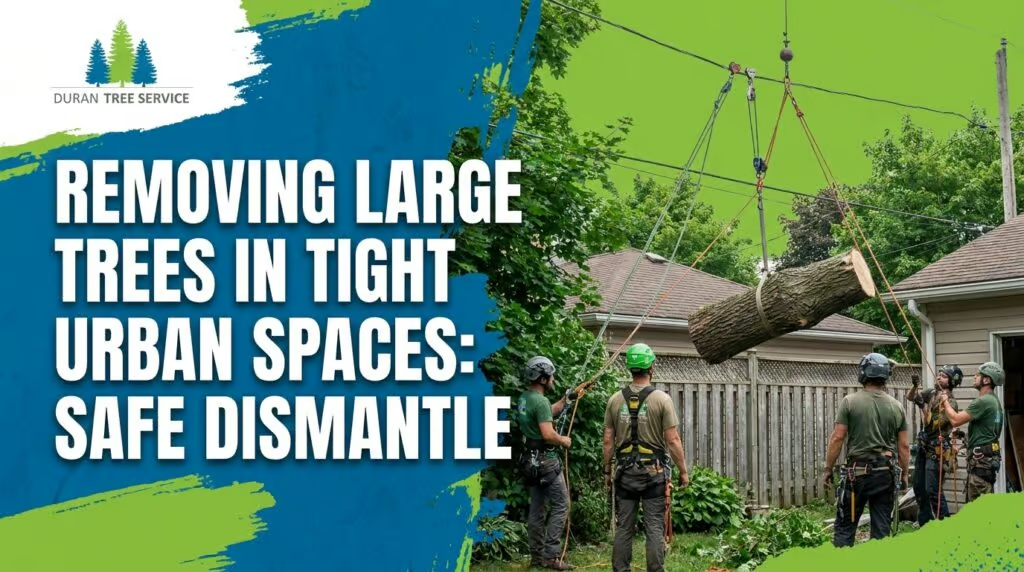
Removing large trees in tight urban spaces requires more than a chainsaw and a clear afternoon. When a mature tree stands within a few feet of a roofline, fence, or service line, every cut must be planned around limited drop zones, overhead obstructions, and the unpredictable movement of heavy wood. In these conditions, the safest approach is almost never felling the tree in one piece.
Instead, professionals dismantle the tree from the top down, using rigging systems to lower each branch and trunk section under controlled tension. This article explains how professionals safely dismantle trees over homes in tight urban spaces, from site assessment and sectional dismantling to utility coordination, property protection, and final cleanup.
Removing Large Trees in Tight Urban Spaces: Understanding the Challenges
Urban sites compress the margin for error. A mature tree in a small backyard may have branches overhanging a roof, a trunk within inches of a fence, and roots under a patio. The constraints reduce the number of safe cut paths and force every piece of wood to be handled deliberately.
Limited Access and Drop Zones
The biggest obstacle is often not the tree itself, but the lack of a clear area where cut sections can fall. In a tight space, the drop zone may be a narrow strip of lawn, a driveway, or nothing at all. We plan each cut around what that limited zone can absorb without bouncing or rolling debris into a structure.
Proximity to Structures and Utility Lines
Close buildings and overhead wires change the arithmetic. A limb that would be harmless in an open field can shatter a window or tear a service line in a confined yard. This proximity dictates shorter cut sections, lower descent angles, and sometimes temporary protection over the roof or wall.
Risk of Property Damage and Injury
The combination of height, weight, and tight space multiplies the consequences of any mistake. A dropped branch can dent a car, crack concrete, or injure a crew member. That is why professionals treat each removal as a controlled dismantling operation rather than a single felling cut.
Know when a hazard crosses the line into an emergency with signs that require 24/7 tree service.
Common Reasons for Tree Removal in Urban Areas
Not every large tree needs to come down, but some conditions leave no safe alternative. Recognizing these conditions early can prevent emergency removals later.
Disease, Decay, and Structural Instability
Fungal bodies, cracked unions, hollow trunks, or significant dieback are signs that a tree may fail without warning. In a tight space, a failing tree is an immediate threat because there is no room for it to fall safely.
- Cankers or deep cavities near the base
- Large dead branches over the roof
- Heaving soil or exposed roots around the base
Root Damage to Foundations and Pavements
Roots from a large tree can lift sidewalks, crack foundation walls, and invade underground pipes. When the tree is close to a home, root pressure can become a structural problem that pruning alone cannot solve.
Safety Hazards from Overhanging Branches
Branches that hang over a bedroom, driveway, or play area create a constant risk, especially during storms or high winds. If the tree has a history of dropping limbs, removal may be the only way to eliminate the hazard.
For properties with Douglas firs, Douglas fir pruning strategies can reduce end‑weight and storm risk so removal isn’t the only option.
Initial Site Assessment and Planning
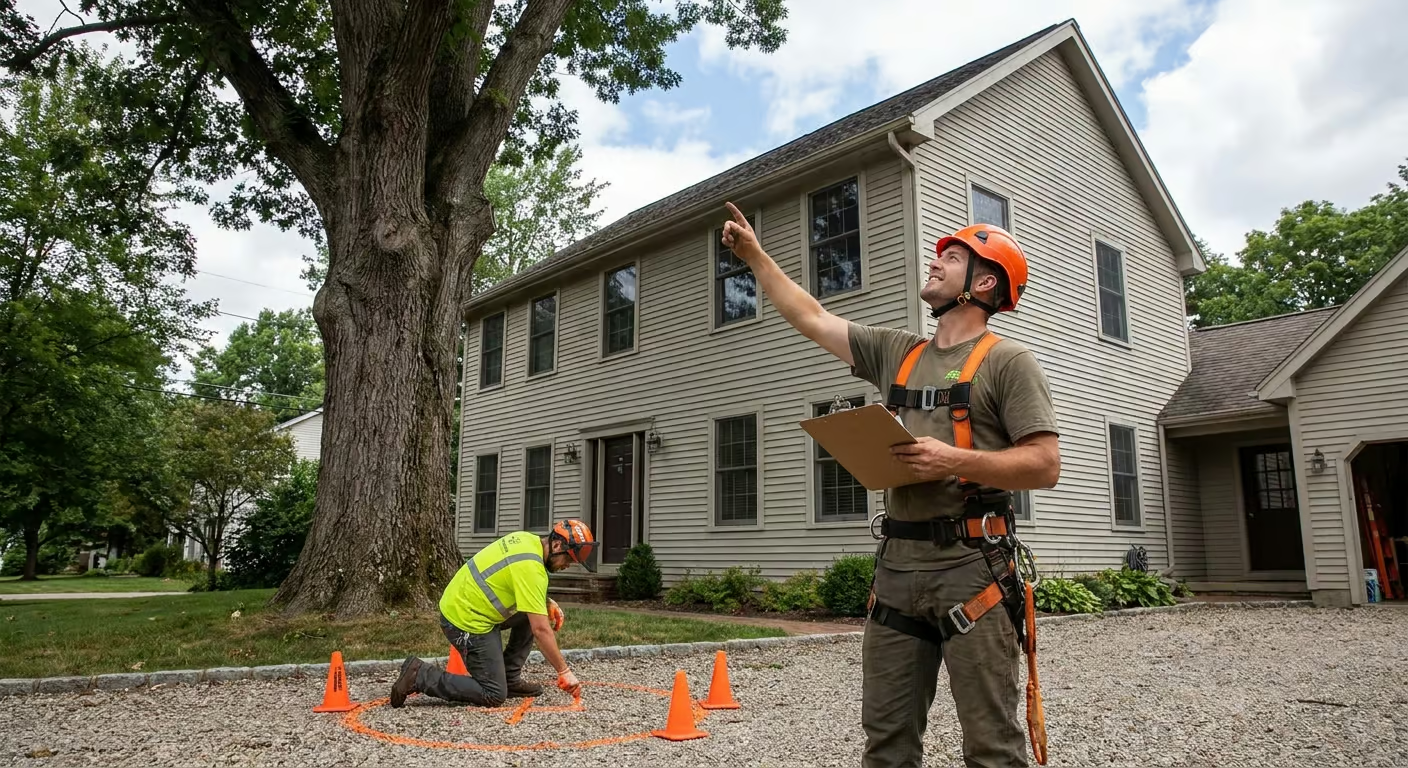
Before any cutting begins, we spend time on the ground mapping the tree and its surroundings. This assessment determines the removal method, the crew size, and the sequence of cuts.
Evaluating Tree Health and Structural Integrity
We inspect the trunk, root flare, and major branch unions for signs of decay, cracks, or included bark. A tree that is not safe to climb changes the entire plan, often requiring an aerial lift or crane from the start.
Identifying Hazards: Power Lines, Buildings, and Traffic
We mark every overhead wire, glass surface, fence, and nearby structure. We also note pedestrian and vehicle traffic patterns so the crew can establish exclusion zones and redirect movement if needed.
Developing a Safe Work Plan and Permits
The plan assigns each crew member a role, sets the order of cuts, and identifies the lowering path for each section. If the municipality requires a permit or utility notification, we handle that before the first saw starts.
To separate dormancy from decline, use five simple checks for tree health.
Sectional Dismantling: The Preferred Method for Safely Dismantling Trees Over Homes
When a large tree stands directly over a home, dropping the trunk in one piece is not an option. Sectional dismantling is how professionals safely dismantle trees over homes: each branch and trunk section is cut small enough to be controlled, then lowered on a rope system. This method eliminates the impact of a full tree hitting the ground.
Top-Down Cutting and Controlled Descent
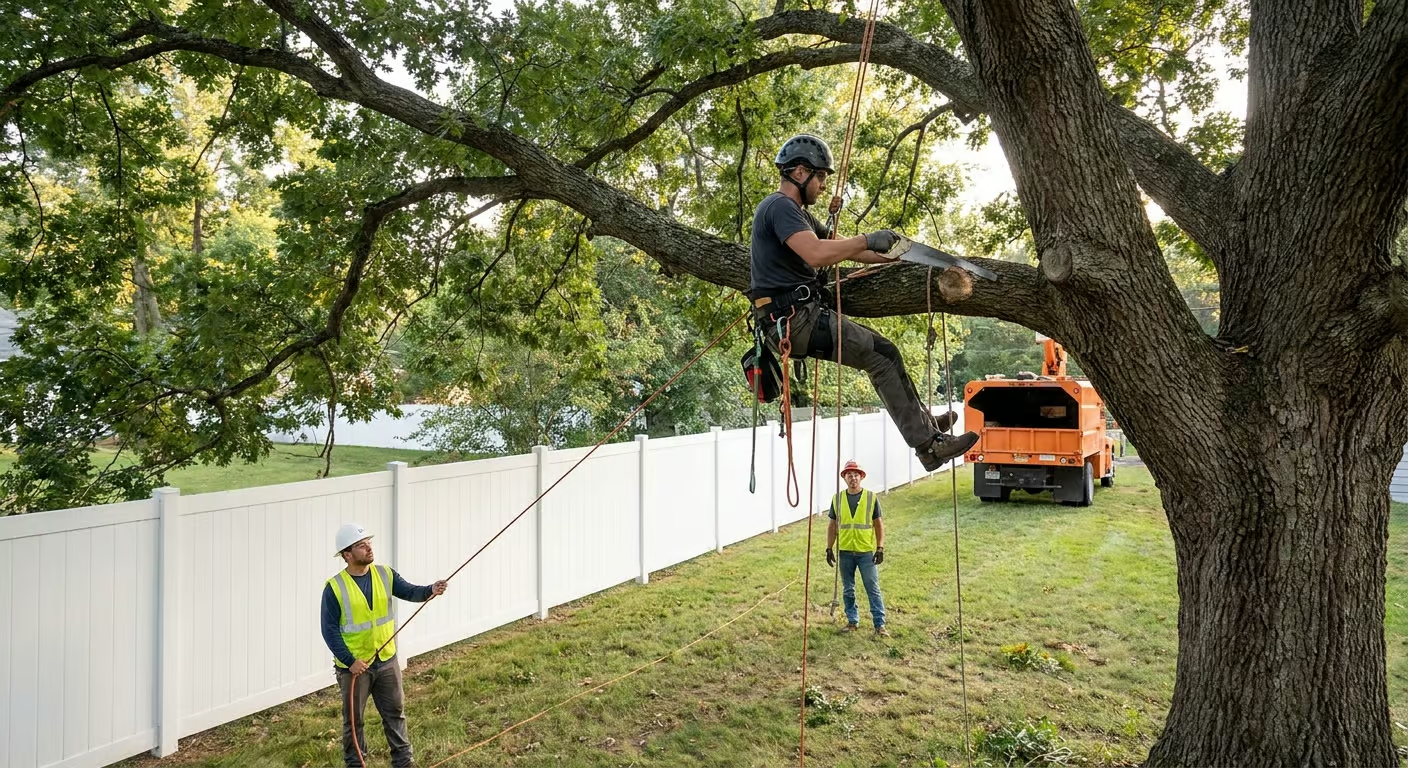
Work starts at the outermost tips and progresses inward and downward. Small branches are cut and either tossed into a clear drop zone or lowered by hand line. Larger limbs are tied off before the final cut, so they hang on the rigging rather than falling.
Choosing Between Climbing and Aerial Access
If the tree is sound enough to climb, a trained climber can reach almost any part of the canopy. When the trunk is decayed, brittle, or too hazardous, we bring in an aerial lift or bucket truck to provide a stable platform without relying on the tree for support.
Minimizing Impact on Surrounding Area
Because each piece is lowered under control, we can thread sections between tight gaps, over a fence, or alongside a wall. This precision minimizes the need for heavy equipment on the lawn and reduces the chance of collateral damage.
Rigging and Controlled Lowering Techniques
Rigging is the system of ropes, pulleys, and friction devices that turns a free-falling limb into a controlled load. In a tight urban space, good rigging is often the difference between a smooth removal and a broken railing.
Rigging Systems: Ropes, Pulleys, and Friction Devices
A typical setup includes a lowering line tied to the branch, a pulley or friction ring set high in the tree, and a ground worker who manages the descent with a lowering device or manual wraps. This creates mechanical advantage and lets the ground worker hold several hundred pounds with one hand.
Selecting Appropriate Lowering Points and Angles
The rigging point must be strong enough to support the load and positioned so the branch swings away from the house. We calculate the natural hinge and use tag lines to redirect pieces that could drift toward a window or gutter.
Communication and Coordination Among Crew
Climber and ground worker use clear hand signals or radio communication to call each cut, lower, and release. A missed signal in a tight space can swing a branch into a wall, so we confirm every step before the saw touches wood.
Use of Aerial Lifts and Bucket Trucks
When a tree is too fragile to climb or the canopy is too dense, an aerial lift gives the cutter a stable, predictable position. The lift arm can reach over lower obstacles and place a worker within inches of the cut without relying on the tree for support.
When Climbing Is Not Safe or Practical
Decayed trunks, severe lean, or a narrow union can make climbing unsafe. In those cases, we position a bucket truck or tracked lift in the driveway, on the lawn, or even on a neighbor’s property if access allows, and work from the basket.
Positioning the Lift in Confined Spaces
Getting a lift into a small yard requires measuring gate widths, overhead clearance, and ground pressure. We may use a compact or tracked lift that can pass through a 36-inch gate and drive over a lawn without sinking.
Precision Cutting from a Stable Platform
From the basket, the cutter can make small, accurate cuts without the fatigue and swing of climbing. This is especially valuable when removing limbs directly over a roof, because the operator can brace the limb and lower it vertically.
Removing a large tree over a home is not a task we take lightly. Our crews have serviced more than 6,000 trees, and that field experience shapes the way we rig, position lifts, and sequence each cut in a confined yard.
Crane-Assisted Removal for Large Trees
Some trees are too large, too compromised, or too tight for sectional lowering by hand. A crane can lift an entire limb or trunk section over the home and set it down in a clear area, eliminating the need for multiple rigging points.
Lifting Entire Sections Over the Home
With a crane, a climber or lift worker makes the cut while the crane operator takes the weight. Once the piece is free, it is hoisted vertically and swung to a staging area. This keeps the load away from the roof and walls at all times.
Reducing Time and Number of Cuts
Because a crane can handle larger pieces, the tree comes down in fewer cuts. This speeds up the removal and reduces the total time workers spend suspended over the home, which lowers the overall risk.
Specialized Crane Operations and Safety
Crane removals require a certified operator, a qualified signal person, and a plan for every pick. We set up exclusion zones for the swing radius and never lift a load over an occupied part of the home if it can be avoided.
Coordinating with Utility Companies During Large Tree Removal
When a large tree grows near power lines, the utility provider may need to de-energize lines, install protective sleeves, or send a representative to the site. This coordination is essential before any branch or tool can come within the required clearance distance.
Identifying and De-energizing Power Lines
We contact the utility as early as possible to identify which lines are energized and what voltage they carry. For lines that pass through the work zone, the utility may shut off power for a short period or move the line temporarily.
Protective Coverings and Clearance Requirements
Insulated line covers or rubber blankets can be placed over lower-voltage lines to reduce the risk of accidental contact. We respect the required clearance around all lines and never assume a line is dead without confirmation from the utility.
Preventing Service Disruptions
De-energizing a line affects neighbors, so we sequence the work to minimize outage time. Often we remove all branches that can be safely cut before the power is disconnected, then handle the remaining sections during a short, scheduled outage.
Learn responsibilities, clearance rules, and safer species in trees and power lines safety.
Protecting the Home While Safely Dismantling Trees Over Homes
Shielding the structure is as important as controlling the cut. We use physical barriers and careful lowering paths to make sure no branch, saw, or boot touches the roof, siding, or windows in a way that causes damage.
Protective Barriers and Plywood Shielding
For branches that must pass close to a wall or window, we may lean plywood sheets against the surface or cover a fragile area with a tarp and padding. This absorbs minor contact and keeps sawdust and small debris off the paint.
Careful Lowering Paths and Drop Zone Management
The ground crew directs every lowered piece into a clear, flat area. If the drop zone is on a slope or near a flowerbed, we lay down tarps or build a small timber mat to spread the impact and keep soil from compacting.
Minimizing Damage to Landscaping and Hardscapes
Before the work starts, we walk the yard with the property owner to identify plants, pavers, and irrigation heads that need protection. Equipment routes are chosen to avoid these features, and any unavoidable area is covered or bridged.

Safety Protocols and Professional Certifications
A tight-space removal is a high-consequence job, so the crew must be trained in modern arboricultural safety standards and equipped with the right personal protective equipment.
ISA Certified Arborists and Trained Crews
The lead person on site should be able to read tree defects and plan a removal that accounts for decay, lean, and load distribution. Certification ensures that the person making those judgments has demonstrated the needed knowledge.
Personal Protective Equipment and Job Site Safety
Everyone on the ground and in the tree wears helmets, eye protection, hearing protection, chainsaw-resistant leg protection, and appropriate gloves. The climber or lift operator also wears a full-body harness with a secondary tie-in.
Emergency Procedures and Communication
Before the first cut, the crew reviews the location of first aid kits, fire extinguishers, and the nearest emergency access route. Each worker knows how to call for help and how to lower an injured climber if needed.
Post-Removal: Stump Grinding and Site Cleanup
Once the tree is on the ground, the job is not finished until the stump is addressed and the site is left clean and safe.
Grinding the Stump Below Ground Level
A stump grinder removes the remaining trunk and large roots to several inches below grade. This prevents tripping hazards and allows grass or new plantings to take over. In a tight space, we use a compact grinder that can fit through narrow gates.
Removing Debris and Restoring the Site
All limbs and trunk sections are chipped or cut into firewood-sized rounds and removed. We rake the area for small twigs, sawdust, and metal debris, and we remove any temporary protection placed for the job.
Preparing for Future Landscaping
With the stump ground and roots reduced, the area is ready for topsoil, seed, or a new planting that fits the available space. We can leave the wood chips on request, but the site should be free of large debris.
Get details on equipment size, cleanup, and depth in stump grinding FAQs.
Local Tree Removal Regulations and Permits
Removing a large tree in an urban area often requires permission, especially if the tree is on a public right-of-way, within a protected zone, or considered a significant species.
Understanding Municipal Bylaws and Permit Requirements
Many municipalities require a permit for removing a tree above a certain diameter or for any tree in a front yard. We check the local rules before scheduling the work and include any required notifications in the plan.
Protected Tree Species and Conservation Areas
Some trees are protected because of their age, species, or location within a conservation zone. In those cases, removal may require an arborist report, a replacement planting plan, or a public notice period.
Penalties for Non-Compliance
Removing a protected tree without a permit can result in fines and an order to replant at the owner’s expense. Working with a professional who knows the local rules avoids that risk and keeps the project legal.
If a large tree is overhanging your home and you need a safe removal plan, contact us to schedule a site assessment. We will walk the property with you, explain the options, and provide a clear service plan before any cutting begins.
Areas We Serve
Access, drop zones, and overhead lines differ from block to block. Our area hub pages show where we work and the kinds of tight‑site conditions we plan for in each place, helping you quickly confirm local coverage before exploring specific services.