
Mature Douglas firs bring structure, shade, and wildlife value to residential yards, but their size and growth habit create pruning challenges that smaller landscape trees do not. The most effective pruning strategy begins with a clear-eyed assessment of each tree’s condition, because a healthy Douglas fir responds to pruning differently than one already stressed by drought, age, or soil compaction. Before making a single cut, we walk the root zone and canopy to look for signs of decline and structural risk.
In this guide, we outline the pruning methods we use on Douglas firs in residential settings: from end-weight reduction on mature specimens to storm damage response and fire-safe clearance. These strategies are grounded in current research on Douglas fir health and our field experience with trees that often exceed 80 feet in residential yards.
Assessing Douglas Fir Health Before Pruning
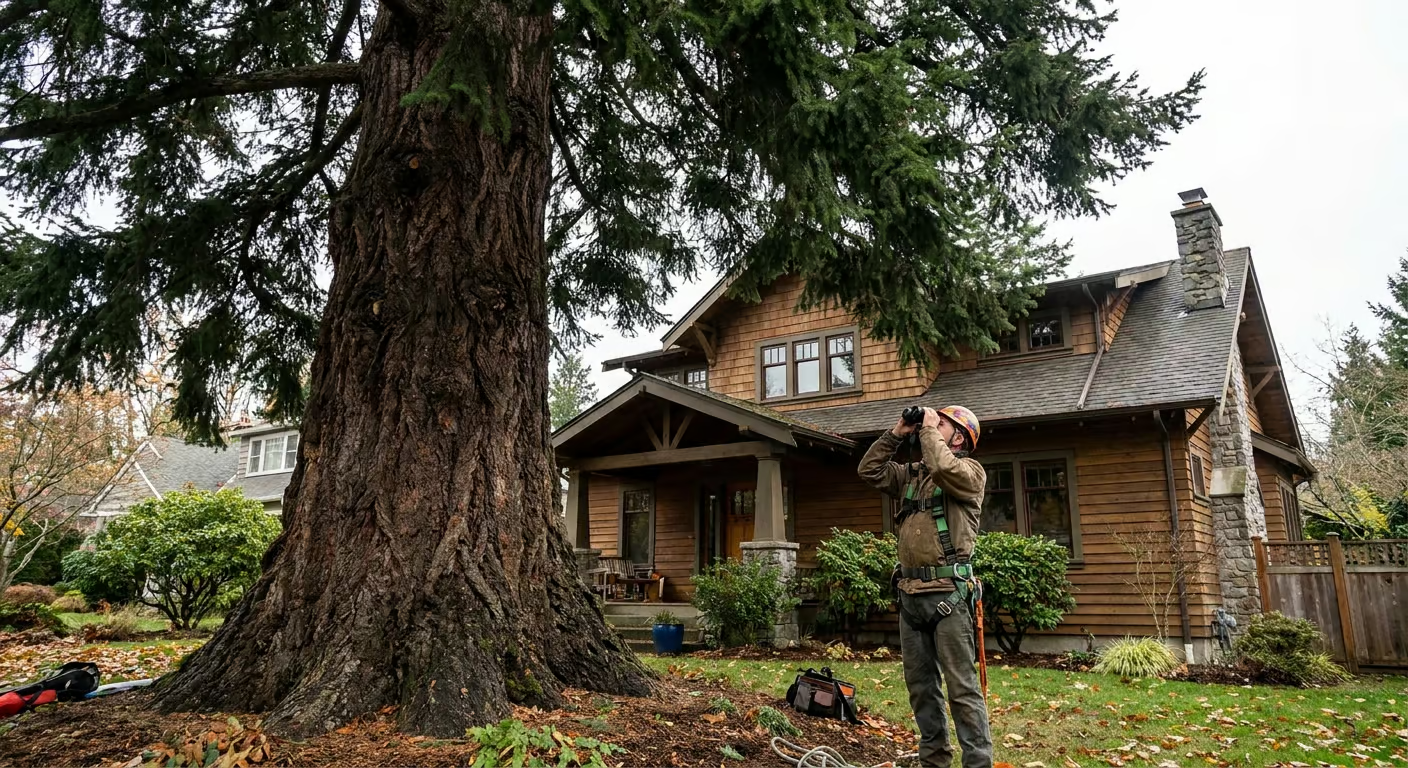
Douglas firs can live for centuries, but residential conditions—root disturbance, irrigation changes, and compacted soil—often shorten that lifespan. A thorough health check sets the pruning plan. We look at three areas: branch condition, structural soundness, and overall vigor.
Identifying Dead and Diseased Branches
Dead branches are usually easy to spot: brown or missing needles, peeling bark, and no new buds. Diseased branches may show discolored needles, resin bleeding, or fungal brackets. We remove dead and dying branches first because they can fall unexpectedly and create entry points for insects and decay.
- Brown or grey needles that remain attached through the growing season
- Cankers, oozing sap, or powdery fungal growth on the bark
- Branches with no live buds when other parts of the tree are flushing
Recognizing Structural Weaknesses
Structural problems in Douglas firs often start small but become serious as branches gain weight. We look for co-dominant stems with included bark, deep cracks at branch unions, and limbs that have grown far beyond the main canopy line. A sudden lean or exposed roots on one side can signal root plate movement, especially after wet weather.
- Tight V-shaped branch attachments rather than U-shaped unions
- Cracks or splits running along the trunk or major limbs
- Soil lifting or cracking near the base of the tree
Evaluating Overall Tree Vigor
Vigor shows up in the needles and growth tips. A healthy Douglas fir produces a full flush of new growth each spring, with deep green needles and evenly spaced branches. Thinning foliage, short needle length, or sparse new growth often indicates stress from drought, root damage, or pest activity. We avoid heavy live pruning on low-vigor trees because removing foliage reduces the energy the tree can produce.
End-Weight Reduction Pruning for Mature Douglas Firs
End-weight reduction is not a heavier form of thinning; it is a targeted method that removes small secondary branches from the outer portions of a limb. The goal is to reduce the leverage that wind and gravity place on branch attachments without changing the tree’s overall shape drastically. For large Douglas firs near homes, this is often the single most effective pruning strategy to lower limb failure risk.
Understanding End-Weight Reduction Technique
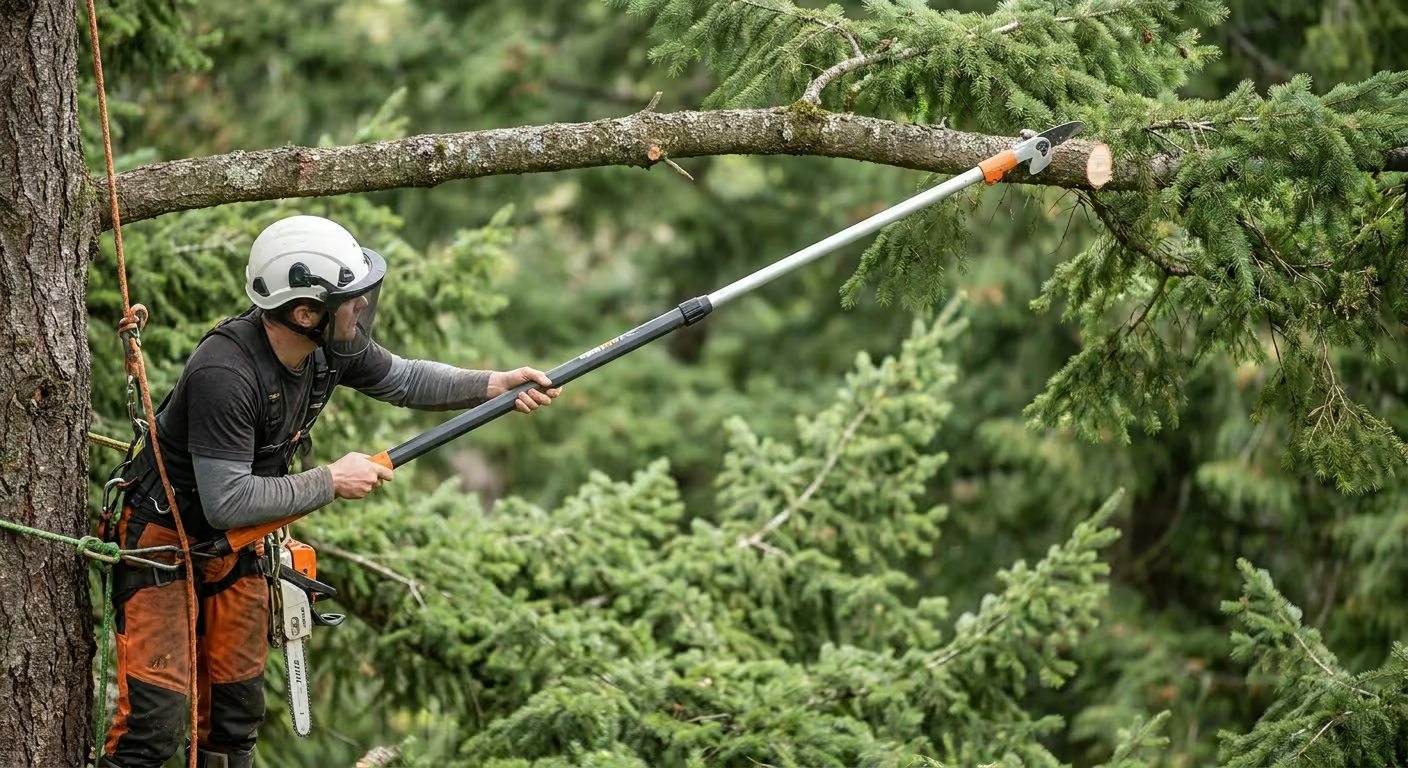
Rather than cutting large limbs back to the trunk, we make small reduction cuts at branch tips. Each cut removes a lateral branch back to a side branch that is at least one-third the diameter of the removed piece. This reduces end-weight while preserving enough foliage for photosynthesis. The technique is especially important in the upper third of the canopy, where wind forces are greatest.
When to Apply End-Weight Reduction
We recommend end-weight reduction for mature Douglas firs that overhang roofs, driveways, or play areas, or any tree that has experienced limb failure in past storms. It is also useful before winter storm season, because removing end-weight reduces the tree’s wind sail. However, we avoid heavy end-weight reduction during active drought because the tree is already stressed and needs its foliage for water management.
Safety Considerations for Large Branches
Never attempt end-weight reduction on branches you cannot reach from the ground with a pole saw. Large Douglas fir limbs can weigh hundreds of pounds and do not fall cleanly when cut. We use climbing lines, rigging, and bucket trucks to lower branch sections under control. Climbing spikes are never used on a live tree unless it is being removed, because spike wounds create entry points for decay fungi.
Pruning Douglas Firs After Storm Damage
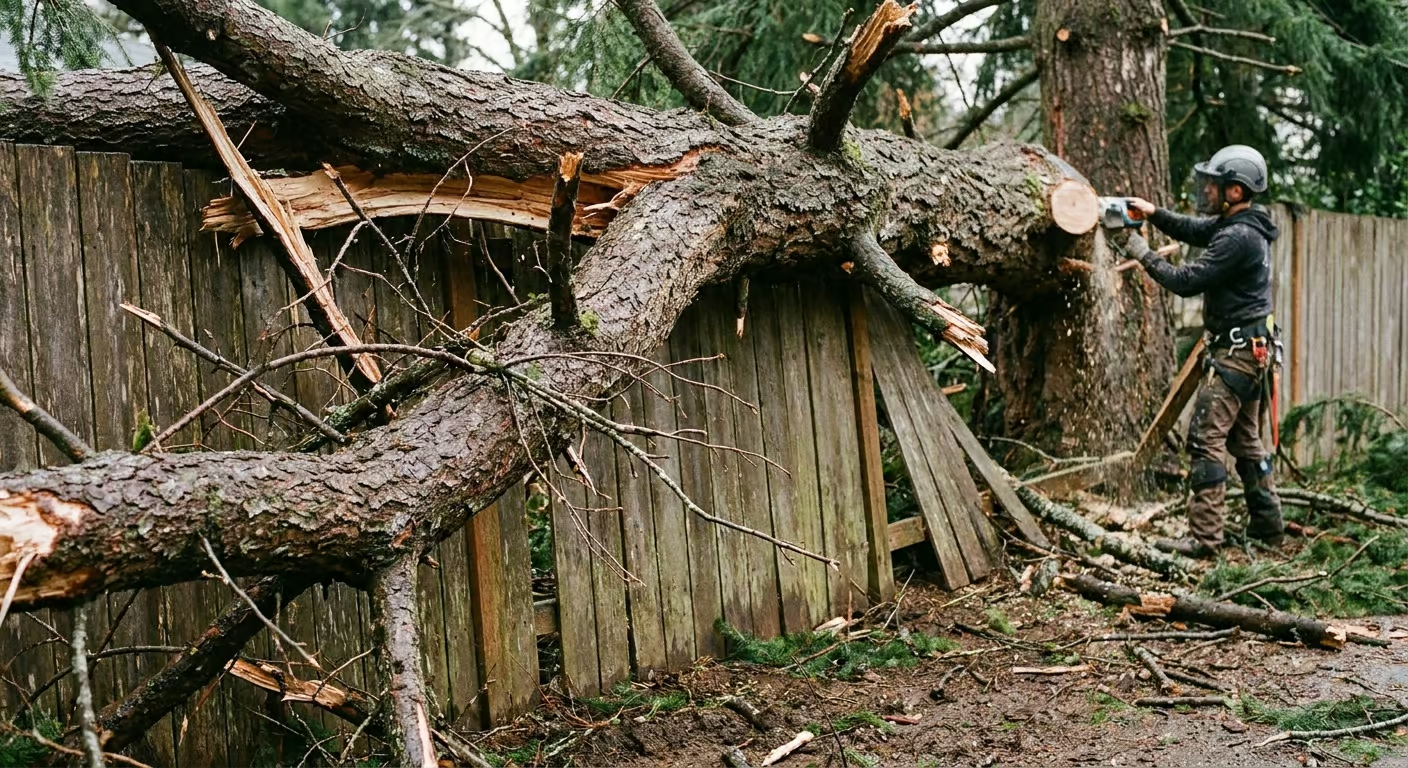
After a wind or ice storm, a Douglas fir may look intact from a distance but hide serious damage. We inspect the tree from the top down, looking for hanging branches, cracked limbs still attached, and any change in the trunk’s angle. The goal is to make the tree safe without over-pruning an already stressed tree.
Assessing Storm Damage
Start at the base and walk around the entire root zone. Look for soil heaving, new cracks, or exposed roots on the side opposite the storm’s prevailing wind. Then examine the canopy for broken branches that have not fallen. A branch that is still partially attached can swing or drop without warning, so we secure or remove those first.
Corrective Pruning for Broken Limbs
For a cleanly broken branch, we cut back to the nearest healthy lateral or to the branch collar. Torn bark and jagged stubs need to be cleaned up with a sharp saw to prevent decay and insect entry. Avoid flush cuts and avoid leaving long stubs—both slow the tree’s compartmentalization of the wound.
Preventing Secondary Damage
Storm-damaged Douglas firs are prime targets for bark beetles and wood-boring insects. The most important step is to remove broken and dying branches promptly, before insects can establish. We also reduce wind resistance on remaining large limbs with end-weight reduction to lower the chance of another failure in the next storm. Keeping the tree watered during dry spells after storm damage helps it recover more quickly.
Fire-Safe Pruning for Douglas Firs in Residential Areas
Douglas firs have thick bark and a high crown, which makes mature trees somewhat fire-resistant, but the dead needles and lower branches are a different story. In residential areas, pruning for fire safety focuses on breaking the vertical and horizontal continuity of fuels so a ground fire cannot climb into the canopy.
Removing Ladder Fuels
Ladder fuels are branches, shrubs, and accumulated debris that allow fire to move from the ground into the tree crown. We prune lower branches up to 6 to 10 feet from the ground, depending on the tree’s size and the surrounding vegetation. This creates a gap that slows fire spread and gives firefighters better access.
- Remove all dead branches within reach of the ground
- Prune low-hanging live branches that touch or nearly touch the ground
- Clear fallen needles and twigs from the base of the tree annually
Creating Defensible Space
Defensible space is the area around a home where vegetation is managed to reduce fire intensity. For a Douglas fir within 30 feet of the house, we keep the lowest branches at least 10 feet above the ground and thin the crown so branches are not touching the roof or siding. Beyond 30 feet, lower branch pruning is still important but can be less aggressive.
Maintaining Fire-Safe Clearance
Fire-safe pruning is not a one-time task. Douglas firs drop needles and small branches throughout the year, and new growth can quickly close the gaps you create. We recommend an annual check before the dry season to remove dead material and re-establish clearance. Keep any firewood or lumber stacked away from the tree’s drip line.
When to Hire a Professional Arborist for Douglas Fir Pruning
Some pruning tasks on a young Douglas fir can be done from the ground with a pole pruner, but as the tree matures, the work moves beyond what a homeowner should attempt safely. Knowing when to step back and bring in a professional protects both you and the tree.
Signs You Need Professional Help
Call an arborist if the tree has any branch larger than 4 inches in diameter that needs removal, if branches overhang a structure or power line, or if the tree is leaning. Multiple dead branches in the upper crown, large cracks, or a recent storm with visible damage are also clear signals. We treat any Douglas fir over 40 feet tall as a technical climbing job.
Choosing a Qualified Arborist
Ask whether the company has certified arborists on staff, carries liability insurance, and has experience specifically with mature Douglas firs. A written pruning plan should describe the cuts to be made and the reason for each one. Avoid contractors who propose topping or excessive thinning—both cause long-term harm to Douglas firs.
We have serviced more than 6,000 trees, many of them mature Douglas firs in residential yards. That field experience means we plan each cut against the tree’s long-term structure, not just the immediate view.
Benefits of Professional Pruning
Professional pruning uses proper cutting techniques that respect the branch collar and minimize wound size. It protects the tree’s structural integrity, reduces storm and fire risk, and can extend the life of a healthy Douglas fir by decades.
If you have a mature Douglas fir that needs pruning, start with a slow walk around the tree and a good look at the canopy. When the work involves climbing, large limbs, or any doubt about safety, contact a qualified arborist for a site visit and a clear pruning plan.
Where reduction cuts can't address a weak union, learn when tree cabling is necessary to prevent a split without over-pruning.
Areas We Serve
Because Douglas fir pruning depends on site conditions, access, and neighborhood risks, our area hubs lay out where we work, typical challenges, and how we plan projects nearby. Choose your nearest hub to take the next step.