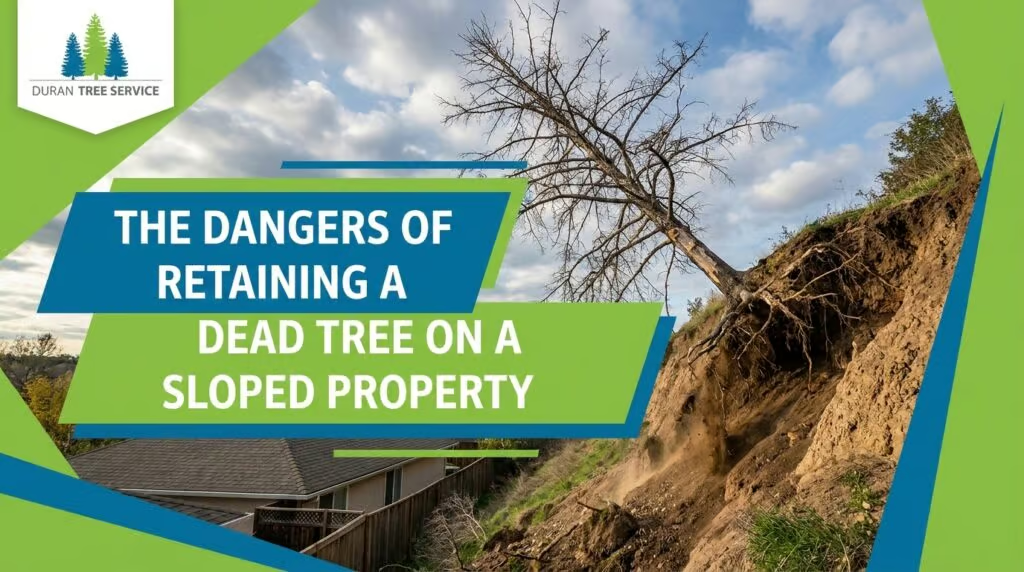
On flat ground, a dead tree is a hazard because its weight can fall on whatever is beneath or beside it. On a slope, that same tree becomes a different kind of threat: gravity pulls downhill, roots are leveraged unevenly, and soil that once held the tree in place is already under erosive stress. Dead wood loses its natural flexibility within months, so a branch that looks stable today can fracture tomorrow under a load it would once have absorbed.
The dangers of retaining a dead tree on a sloped property are not limited to the visible trunk. Root decay progresses underground, slope creep shifts the tree’s center of gravity, and hidden hollowing can make failure sudden and directionally unpredictable. We’ll walk through the mechanics of slope-specific failure, the below-ground risks, and the legal and ecological factors that make timely assessment critical.
The Dangers of Retaining a Dead Tree on a Sloped Property
A dead tree no longer repairs wounds or adds flexible new growth. On level ground, that decline is dangerous enough; on a slope, the tree’s entire weight distribution changes. The angle of the ground shifts the effective lever arm of the trunk, meaning smaller wind gusts or weaker root anchorage can produce failure that a flat-ground tree would survive.
Sudden limb failure and structural collapse
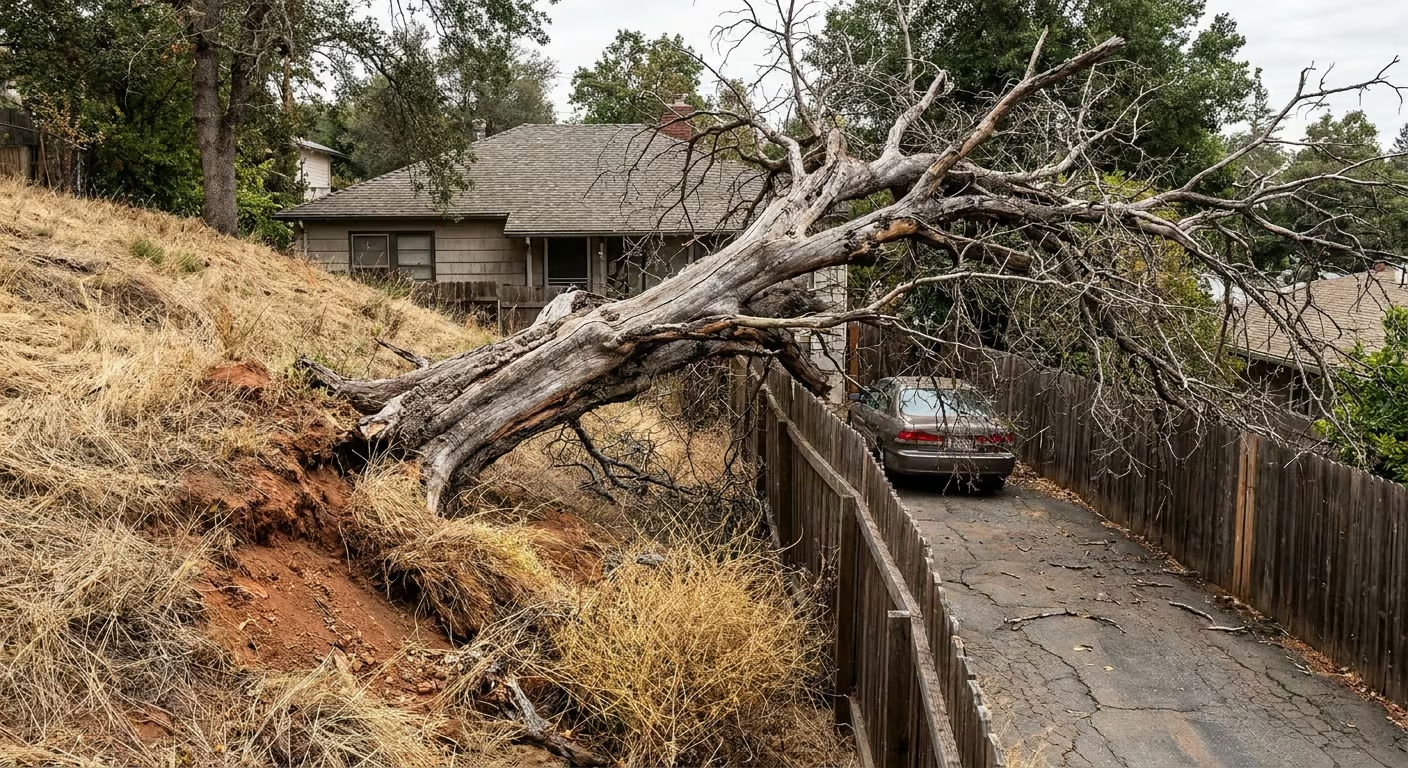
Dead branches lose moisture and tensile strength as fungi colonize the wood. Unlike live wood, dead limbs do not bend under load—they snap. On a slope, these failures often occur without warning, even during calm conditions, because gravity is already pulling the limb downhill. A dead oak or ash that would take years to decay on flat ground can shed large limbs within one or two seasons when its weight is constantly shifted toward the downslope side.
Downhill trajectory amplifies impact force
When a limb or trunk fails on flat ground, it falls a short vertical distance. On a slope, the fallen piece gains additional momentum by tumbling or sliding downhill. A branch that would land harmlessly a few feet away can travel tens of feet down a steep grade, striking fences, vehicles, or people far below. The effective fall height and horizontal travel combine to increase impact energy well beyond what the same branch would deliver on level terrain.
Vulnerability to wind and rain events
Slopes naturally channel wind and water. A dead tree on a slope is exposed to stronger localized gusts as wind flows up or down the grade, and saturated soil after heavy rain reduces root friction. The combination of increased wind load and reduced anchorage means a marginal dead tree can become a full failure during a routine storm. We consistently see slope trees fail earlier in a wind event than nearby trees on flat ground, simply because the soil has less holding power when saturated.
Freeze-thaw cycles accelerate wood decay and slope movement
In regions with winter temperature swings, water enters cracks and decay pockets in dead wood, freezes, expands, and widens the fractures. The same process acts on the soil: frost heave pushes soil downhill in micro-movements, slowly shifting the tree’s root plate and trunk angle. Over a single winter, a dead tree on a slope can move several inches, enough to make an already weak stem fail catastrophically when the ground thaws.
Underground Decay: Root Failure and Soil Instability
What happens below the soil line is often more dangerous than what happens above it. A dead tree’s root system no longer receives carbohydrates from the canopy, so it begins to decay within the same season the tree dies. On a slope, that decay removes the very anchors that resist both wind load and the constant downhill pull of gravity.
Root decay undermines tree anchorage on slopes
Live roots flex and redistribute load when wind pushes a tree. Dead roots become brittle and lose their tensile strength. On flat ground, a dead tree can sometimes stand for years because its weight sits directly over a broad root plate. On a slope, the root plate is already asymmetrical—shallow on the downslope side, deeper on the upslope side. As downslope roots decay, the tree loses the lateral support it needs most, and the trunk can hinge out of the ground or snap at the root collar without warning.
Soil erosion and runoff increase landslide risk
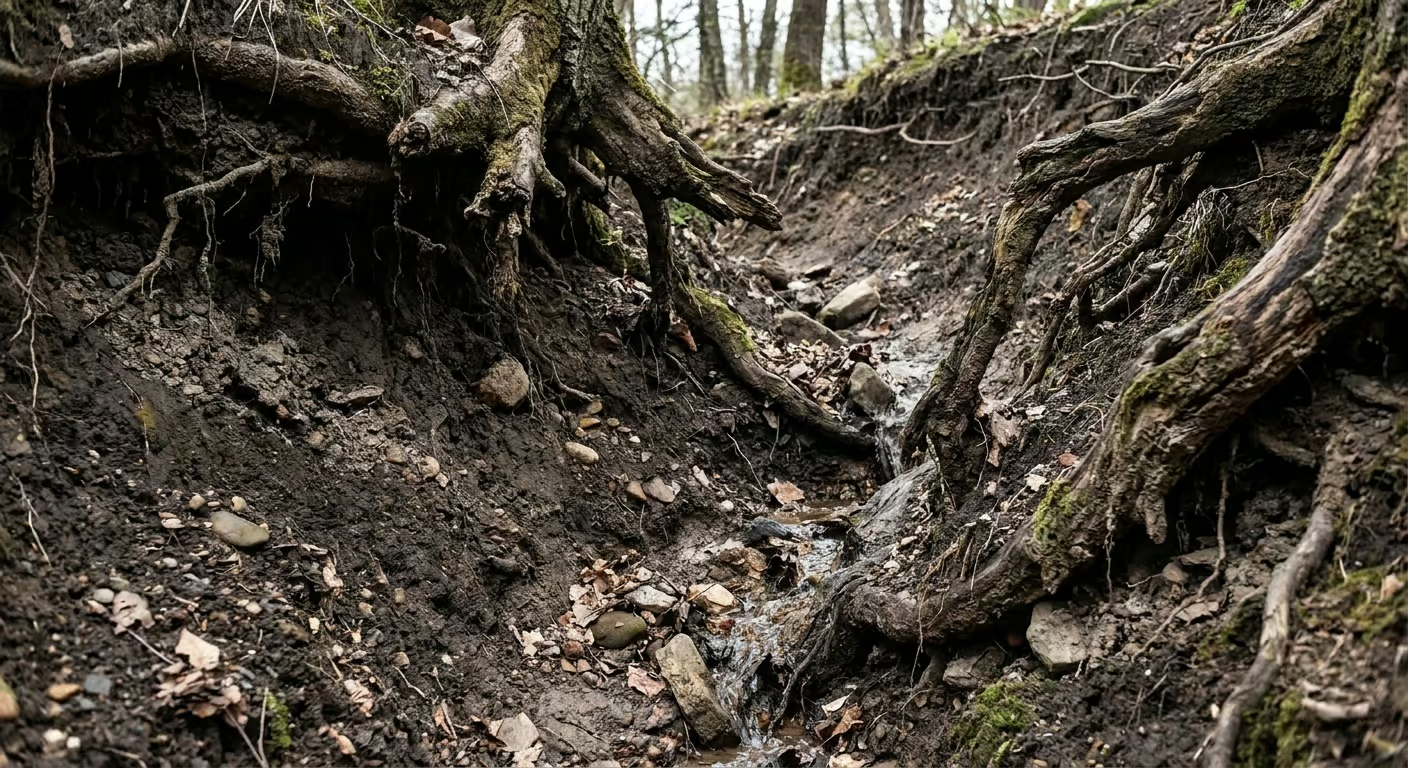
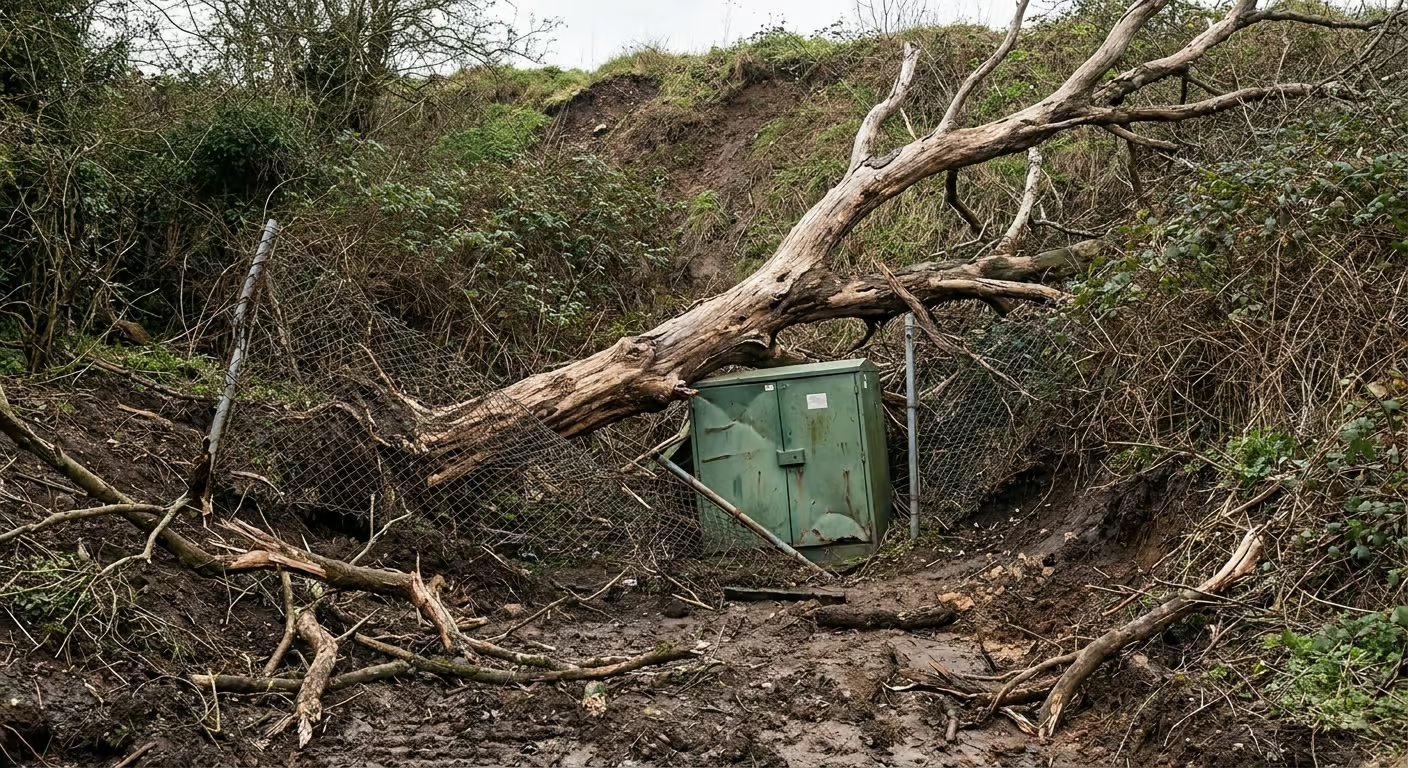
A living tree intercepts rainfall and its roots bind soil particles together. Once the tree dies, its canopy no longer reduces raindrop impact, and its roots no longer hold soil on the slope. Runoff begins to cut rills and gullies around the root plate, removing support and exposing roots to air and decay organisms. On steep slopes, this process can trigger shallow landslides that move not just soil but the entire tree mass downhill.
How dead roots stop binding soil and absorbing water
Live roots take up water from the soil, which reduces local pore pressure and helps stabilize the slope. Dead roots leave behind organic matter that initially holds some structure, but as they decompose they create voids. These voids become pathways for water infiltration, increasing pore pressure and reducing effective soil strength. In short, a dead tree on a slope shifts from being a stabilizing element to being a water-channeling weakness, often within two to three growing seasons.
Downslope Damage and Legal Liability
When a dead tree on a slope fails, the consequences rarely stay on your property. The downslope trajectory means your neighbor’s fence, a public walkway, or a power line can become the target. Property owners are generally expected to identify and address obvious hazards, and a dead tree leaning over a slope is one of the most obvious there is.
Personal injury risks and owner negligence liability
A falling limb or trunk can strike anyone below: a child playing in a yard, a delivery driver, a pedestrian on a sidewalk. Courts and insurers often treat a clearly dead tree near a target as foreseeable negligence if the owner had time to inspect and remove it. Negligence liability can include medical expenses, lost income, and pain and suffering—often exceeding the value of the property itself. The standard of care is higher precisely because dead trees on slopes are known to be unstable.
Structural damage to buildings, fences, and utilities
A dead tree on the upper part of a slope can travel a surprising distance when it falls and slides. Fences at the bottom are the most common casualty, but roofs, retaining walls, and underground utility lines are also at risk when the root plate pivots and pulls soil aside. Overhead power and communication lines running along a slope are particularly vulnerable, and a downed line creates a secondary hazard that may take days to repair.
Pest and disease spread to healthy trees and property
Dead trees are magnets for carpenter ants, wood-boring beetles, and decay fungi. While some of these organisms are specific to dead wood, others will move into nearby living trees or wooden structures once the dead tree’s resources are exhausted. On a slope, pest migration often follows the root and soil pathway downhill, putting a whole hillside of healthy trees at risk. Removing or mitigating the dead tree early interrupts that transfer.
Assessment Challenges and Ecological Trade-offs
Not every dead tree on a slope needs to be removed immediately. But deciding which ones can stay requires understanding hidden decay, species behavior, and the value the snag provides to wildlife. Slopes make that assessment harder because the most important structural clues are underground or on the downhill side, where access is often limited.
Hidden decay: why slopes conceal structural weakness
A dead tree can look solid while its heartwood is hollowed by fungi. On a slope, the tree’s lean and the soil movement mask the usual visual signs of instability: cracks may be on the uphill side, root plate lifting may occur underground, and the downslope side may be buried by accumulated debris. We routinely find that slope trees have more advanced decay on the downslope side of the root crown, exactly where the load is highest, because water and organic matter collect there.
Species-specific decay patterns and failure modes
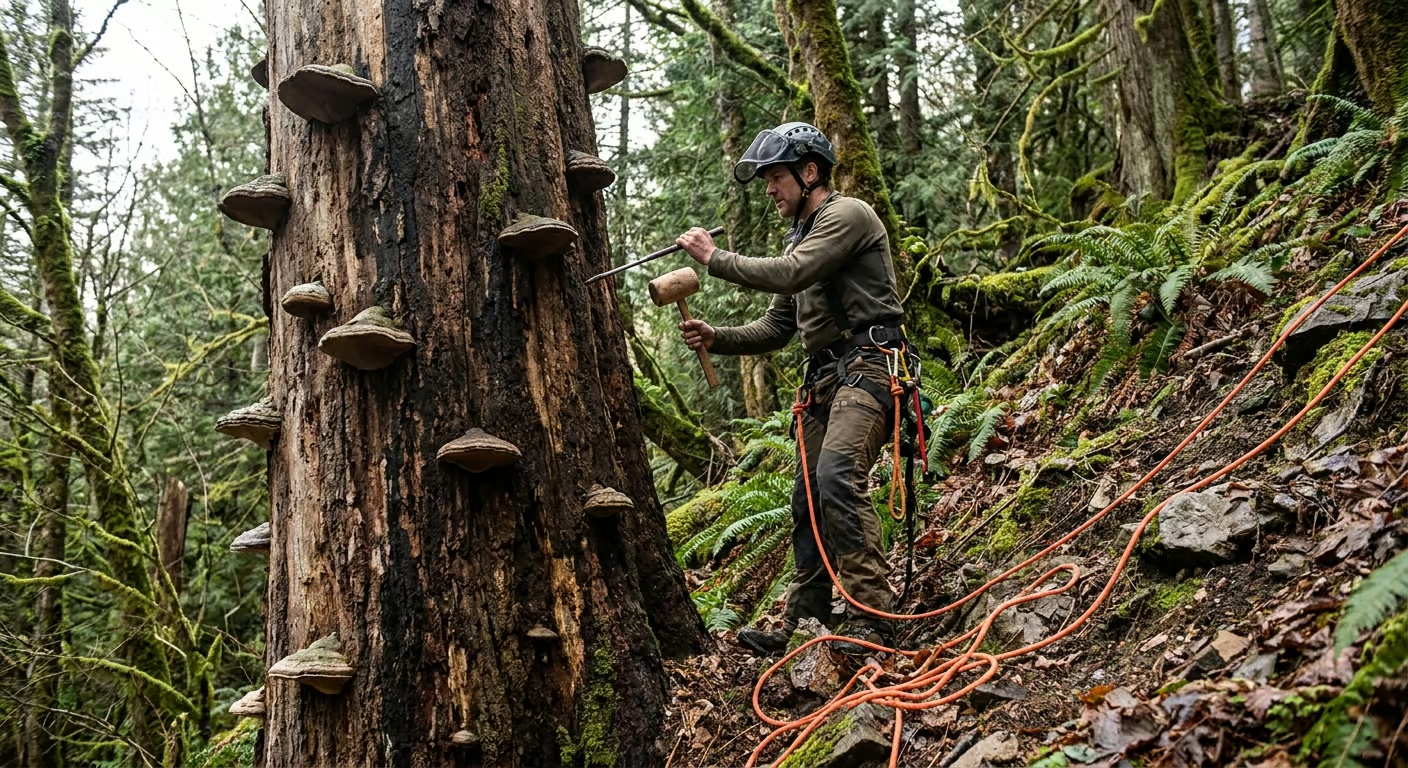
Dead birch decays quickly and loses structural integrity within a couple of years, especially on moist slopes. Dead conifers turn reddish brown, shed bark, and then drop limbs in a predictable sequence, but their shallow root plates make them prone to full uprooting on slopes. Oak and beech can stand for many years with hollow trunks, but that very persistence creates a false sense of security: the trunk may fail suddenly at a point of hidden decay, often above the ground line and below the first branches. Understanding these species differences is essential before deciding whether a slope tree can be left as a wildlife snag.
Weighing wildlife habitat against safety risks
Dead trees provide valuable habitat for woodpeckers, cavity-nesting birds, bats, and insects. A snag far from any structure or trail on a low-use natural slope can often be retained safely, perhaps reduced in height to lower its failure risk. The calculus changes when the snag sits above a home, road, or play area: the same dead tree that would be an ecological asset in a forest becomes an unacceptable liability in a residential slope. In those cases, partial retention, such as a 10- to 15-foot stump left on site, can preserve some ecological function while removing the falling hazard.
Our experience with slope trees helps us evaluate these trade-offs quickly. Having serviced more than 6,000 trees, we recognize the early signs of root plate failure that are easy to miss from the top of a slope.
From Hazard to Action: Managing Dead Trees on Slopes
Once a dead tree on a slope has been identified as a risk, the path forward depends on access, soil conditions, and the tree’s failure mode. Waiting rarely makes the job easier; it usually makes the tree more brittle, the soil more unstable, and the removal more complex.
Why removal on slopes is inherently complex
Felling a tree on flat ground is straightforward by comparison. On a slope, standard felling cuts may not work because the tree’s lean and weight distribution are asymmetric. The fall direction must often be controlled uphill or across the slope to avoid launching the tree downhill. Crews need to work from stable platforms, use winches or rigging, and protect the slope from further erosion after the tree is down. In many cases, a dead tree on a slope is best removed piece by piece using ropes and friction devices rather than felled as a whole.
The escalating risk of delay
Every season a dead tree remains on a slope, its wood loses more strength and its roots lose more grip. What could be a controlled removal in spring may become an emergency storm response in winter. The tree may also deposit debris, seed pests, or shed limbs onto the slope, complicating access and cleanup. Acting before the tree reaches advanced decay almost always reduces the risk to workers, neighboring property, and the slope itself.
Professional assessment and proactive management
A thorough slope-tree assessment examines species, decay stage, root plate integrity, soil type, slope angle, and what lies downslope. In many cases, the safest management is full removal; in others, crown reduction or retaining a short habitat stump can reduce risk while preserving some ecological value.
If a dead tree on a slope is within falling distance of your home, boundary, or footpath, don’t wait for the next storm to make the decision for you. Request a professional assessment to determine whether the tree can be safely retained or should be removed before it becomes a liability.
After high winds or heavy rain, use post-storm checks that reveal hidden failures before a slope tree lets go.
Areas We Serve
Local soil, wind, and exposure shape how a dead tree on a slope fails, and how we plan the job. These area pages show how we work nearby, so you can match our approach to conditions in your neighborhood.