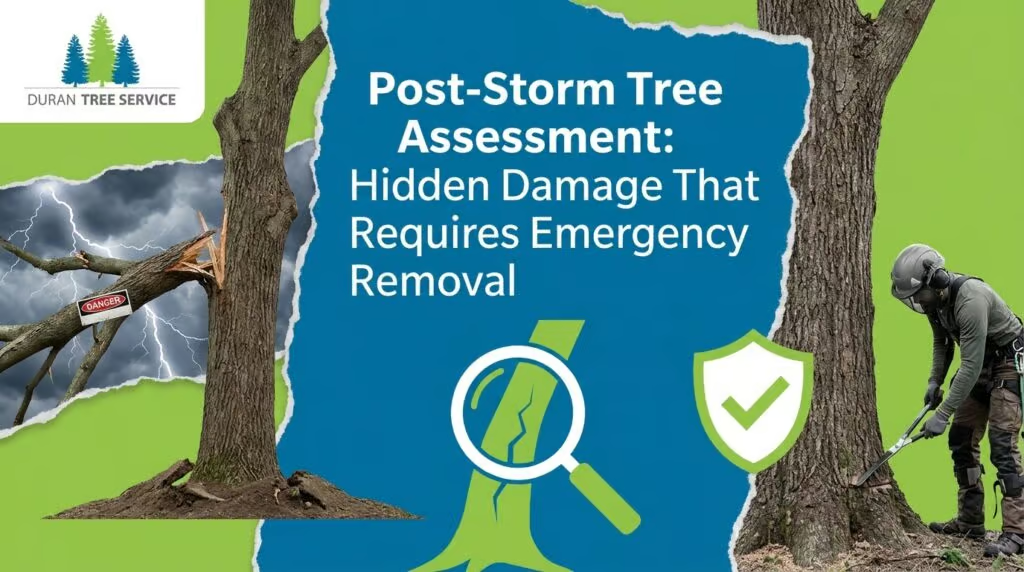
After a storm passes, the tree that looks almost fine is often the one that needs emergency removal most urgently. Post-storm tree assessment: hidden damage that requires emergency removal is about reading the subtle signs—a new lean, a faint crack, a slight lifting of soil—that can precede a catastrophic failure days or weeks later. We focus on what homeowners miss when they only look at the obvious broken branches.
A fallen limb or uprooted trunk is easy to spot, but hidden damage like a split co-dominant stem or a loosened root plate can fail without warning, especially under the next wind load. This guide walks you through the specific structural defects that mean a tree needs urgent professional attention, not a wait-and-see approach.
Safety First: Avoiding Hazards During Post-Storm Assessment
Before you inspect any tree, understand that the assessment itself can be dangerous. Storm-damaged trees are unpredictable, and hazards that are not obvious from the ground can turn a routine check into an injury.
Potential hazards to look for (downed power lines, unstable trees, hanging branches)
Downed power lines are the most immediate threat. Treat every line as energized, even if it is lying on the ground, and call the utility company before approaching. Unstable trees include those with visible root plate movement or fresh cracks that may shift when you walk nearby. Hanging branches—especially large ones caught in the canopy—can drop without sound, so do not stand under a tree that shows any sign of overhead debris.
Steps to take before inspecting (call utility company, keep distance, use binoculars)
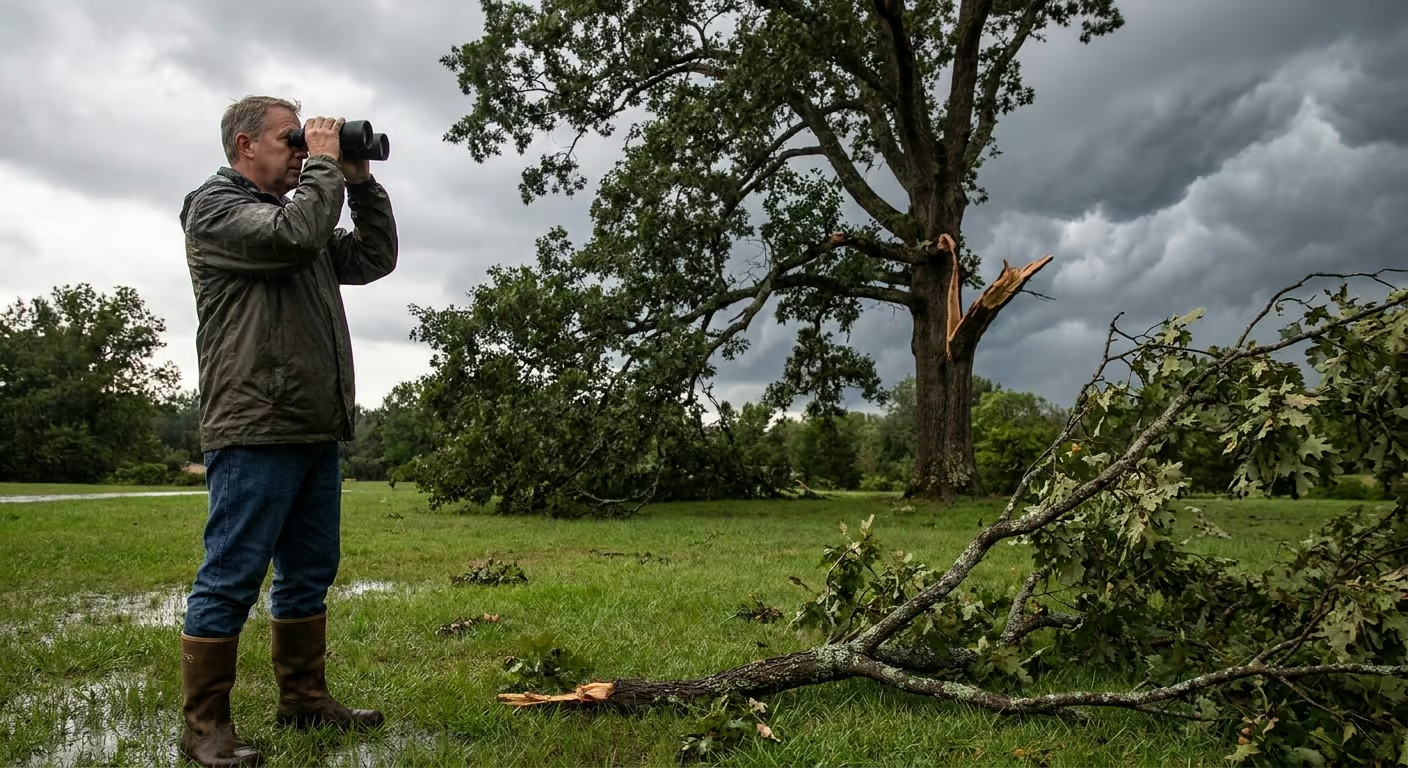
Start your assessment from inside the house or from an open area well away from the canopy. Keep children and pets inside. Use binoculars to examine the crown and trunk from a safe distance, and do not enter the drop zone until you have ruled out hanging limbs and power line contact. If a tree or branch is touching a service line, call the utility company and wait for clearance before any further work.
Hung-Up Branches and Broken Limbs: Hidden Dangers in the Canopy
Some of the most dangerous storm damage never touches the ground. A branch that breaks but remains caught in the tree is a ticking clock.
What are widow-makers and why they are dangerous
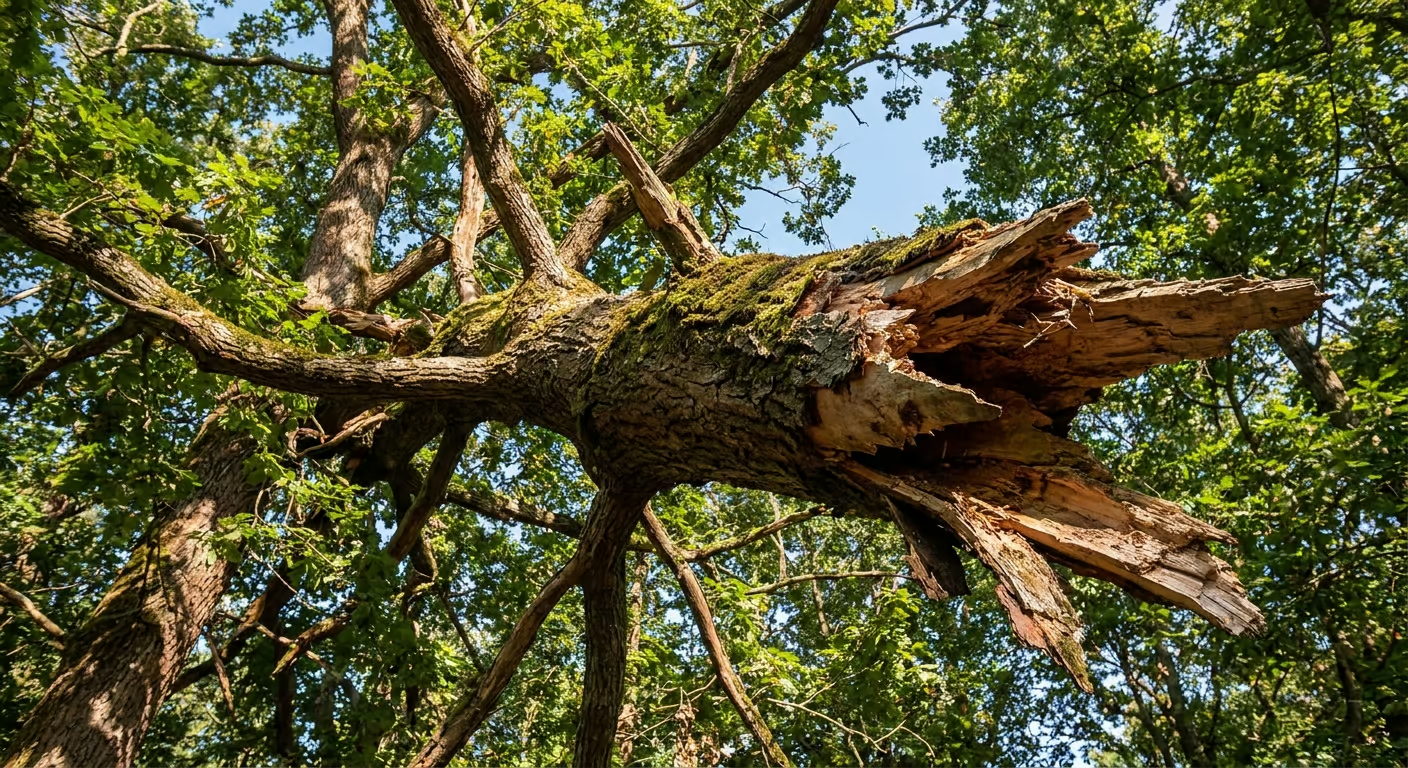
Large limbs that snap but do not fall are commonly called widow-makers. They can remain suspended for hours or days, held only by a thin strip of bark or tangled smaller branches. The risk is not just the branch itself; when it finally falls, it can bring down other limbs or strike with enough force to injure anyone below. We treat every hung-up branch as an emergency until it is safely lowered to the ground.
How to spot hanging branches from the ground
Look for branches that are angled awkwardly, crossing over others, or hanging below the normal crown line. Broken branch tips often show fresh white or pale wood where the bark has stripped away. Use binoculars to scan the entire canopy—not just the areas you can see from directly beneath. If you cannot see the whole crown, assume there may be hidden failures and keep people away until a professional can inspect with climbing gear or a lift.
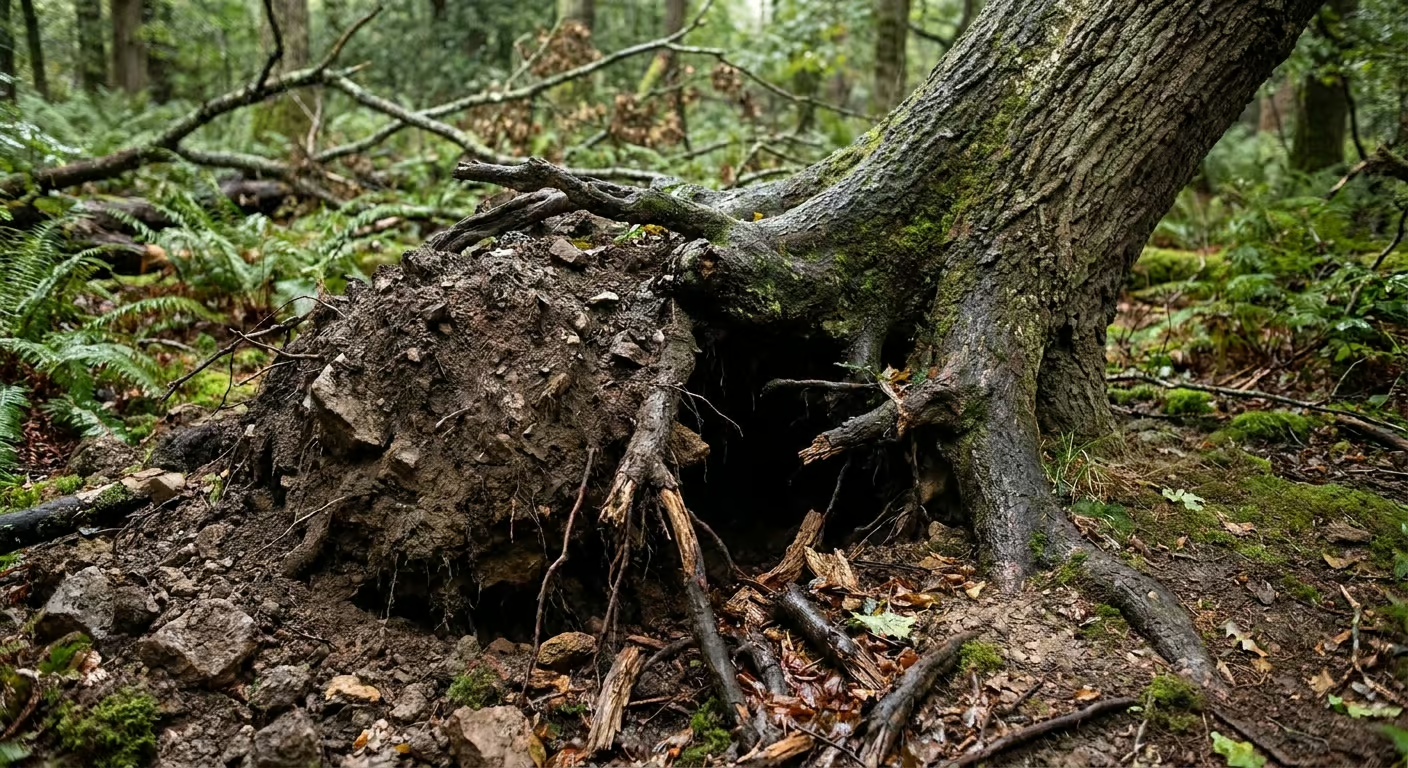
Root Plate Movement and Soil Heaving: Signs of Uprooting
A tree can look upright while its roots are already failing. Storm winds can rock a tree back and forth, loosening the soil and breaking roots without tipping it over.
Identifying heaving soil, exposed roots, and cracks near the base
Walk around the tree only if there is no overhead hazard. Look for a raised mound of soil on one side of the trunk, fresh cracks radiating through the lawn, or roots that were previously underground now exposed. These signs indicate the root plate has shifted. The soil may be lifted on the side opposite the lean, forming a gap between the trunk and the ground.
When leaning trees indicate compromised root systems
Many trees have a natural lean and have been stable for decades. The concern is a new lean that appeared after the storm, especially when paired with soil heaving, torn roots, or a widening gap at the base. A tree that previously grew straight but now tilts toward a house, driveway, or walkway is a red flag. If the ground around the base feels soft or you can see root movement, treat it as an emergency removal candidate and keep the area clear.
Trunk Cracks, Splits, and Weak Branch Unions
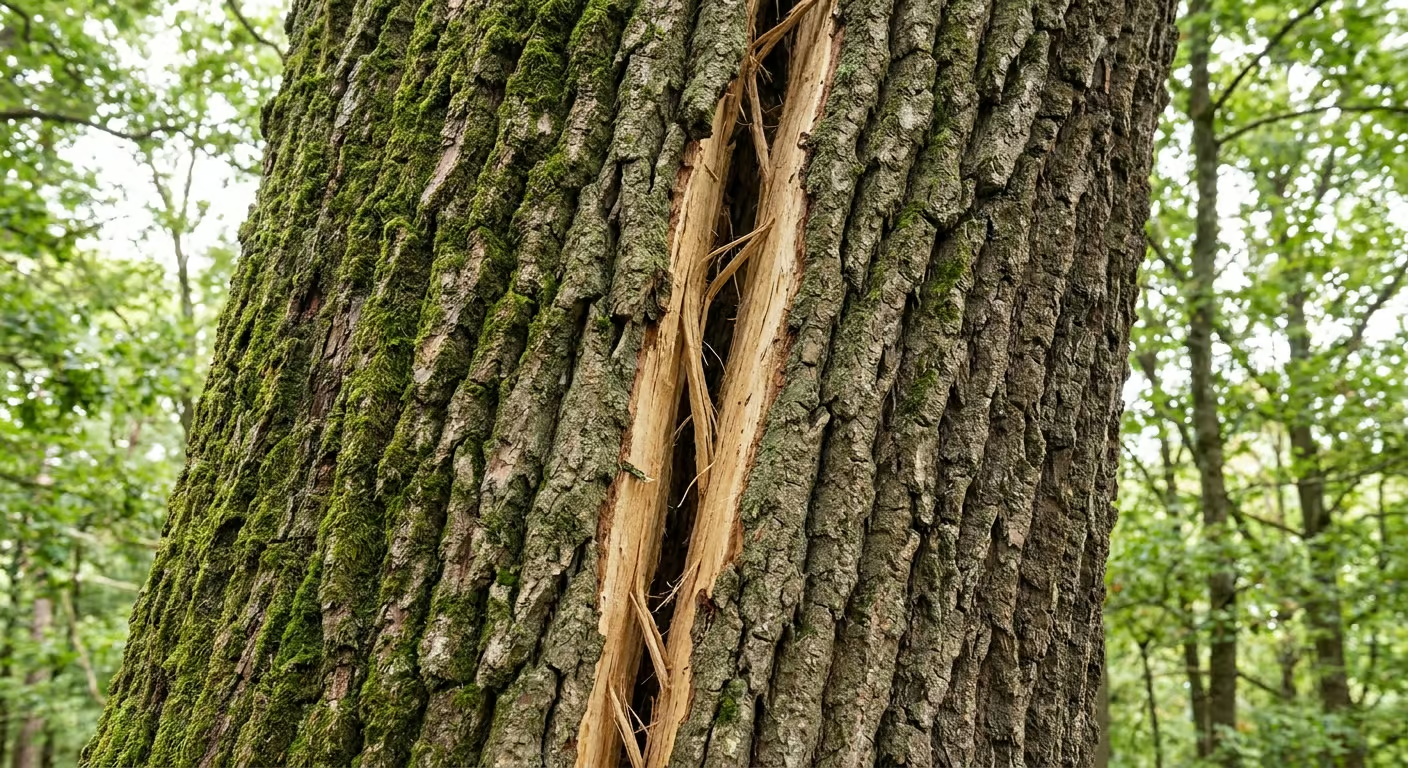
The trunk is the tree’s main load-bearing structure, so any crack or split there is a serious finding. Some cracks close up after the wind drops, making them nearly invisible from the ground.
Different types of trunk damage (vertical cracks, horizontal splits)
Vertical cracks run up and down the trunk and often follow the grain of the wood. They can open and close with the weather, but each cycle weakens the tree further. Horizontal splits are less common but often indicate a shear failure where the wood fibers have separated. Look for bark that is pulling away from the trunk, open seams, or dark lines that were not there before the storm. Even a thin crack can extend deep into the heartwood.
How weak branch unions can develop into major failures
Weak branch unions form when two branches grow close together with bark trapped between them. This included bark prevents the wood from knitting together, creating a seam that can split under wind load. After a storm, inspect the base of major branch unions for fresh cracks or a V-shaped opening. If a union has begun to split, the entire limb can peel away from the trunk, tearing a long strip of bark and possibly compromising the main stem.
Co-dominant Stems and Included Bark: Storm-Exposed Weak Points
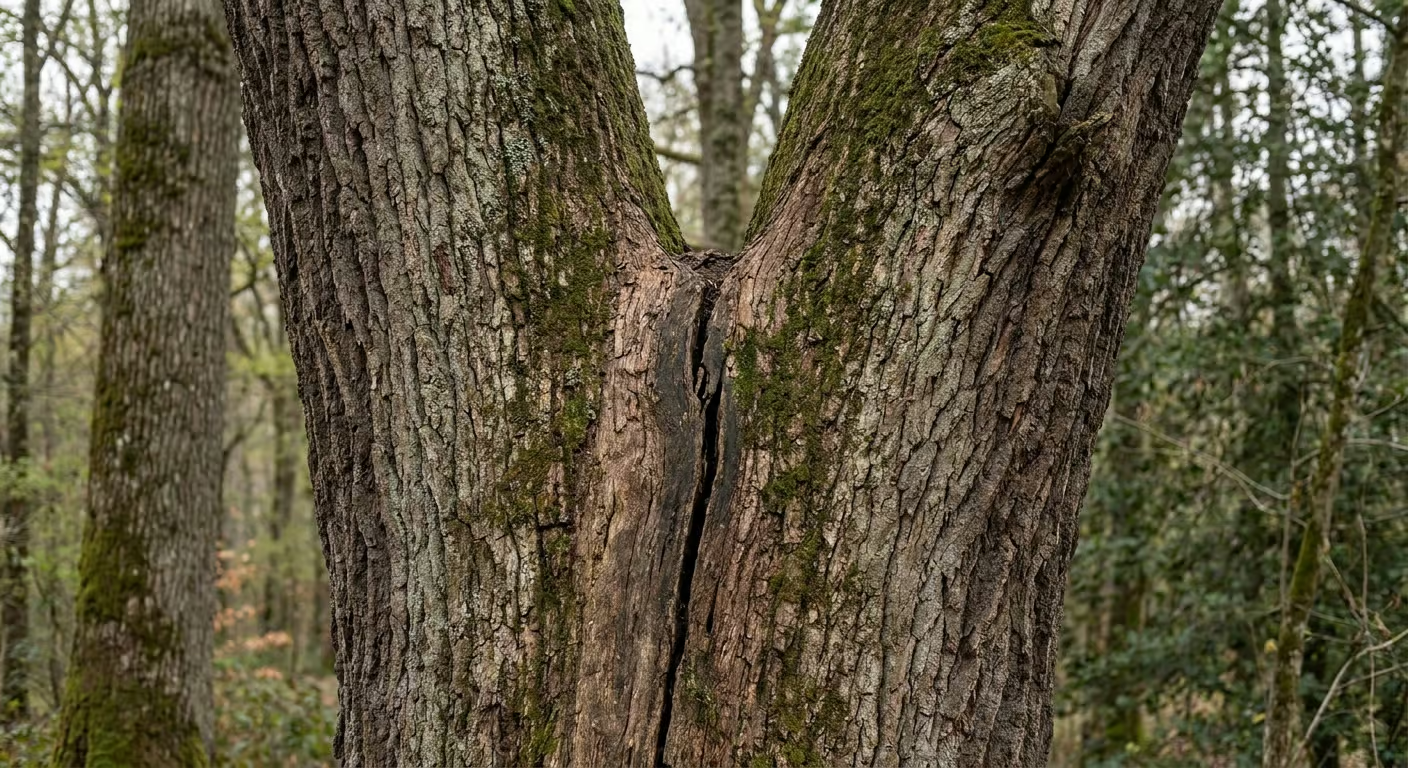
Some trees grow with two or more main stems of similar size. These co-dominant stems often have a hidden weakness at the point where they meet.
Understanding co-dominant stems and included bark
Co-dominant stems occur when two leaders grow upward from the same point, creating a narrow V-shaped union. As the stems thicken, bark becomes trapped inside the union, preventing proper wood formation. This included bark is a natural fault line. The union is weaker than a properly angled branch attachment, and it can fail suddenly under wind or snow load.
Why these features are prone to splitting after storms
Storm winds twist and bend the two stems in different directions, concentrating stress at the V. If a crack starts at the union, it can run down the trunk or up one stem. After a storm, check co-dominant unions for fresh vertical cracks, sap bleeding, or one stem leaning away from the other. Even if the crack is hairline, the tree may need a brace, cable, or emergency removal if the target below is occupied.
Red Flags: When Hidden Damage Demands Emergency Tree Removal
Not every damaged tree needs to come down. But certain signs mean the tree is beyond saving and poses an immediate threat. Here is the short list we use when triaging storm damage.
List of critical signs (deep splits, significant uprooting, >50% canopy loss, dangerous lean)
- Deep trunk splits that extend into the main stem or completely through a co-dominant union.
- Significant uprooting with visible root plate movement, lifted soil, or more than one-third of the root system exposed.
- More than 50% canopy loss from broken main limbs, leaving the tree unable to support itself and vulnerable to decay.
- A dangerous lean toward a house, driveway, sidewalk, play area, or neighboring property that appeared or worsened after the storm.
- A large hung-up branch directly over a high-traffic area that cannot be safely removed without a crane or rigging.
How to prioritize removal when multiple trees are affected
After a widespread storm, you may have several trees with damage. Prioritize based on the target: what would be hit if the tree or branch falls? A tree leaning over a bedroom is more urgent than one leaning over an empty field. Also consider the size of the tree and the likely direction of failure. If a tree blocks an exit route or emergency access, it becomes a higher priority. We recommend documenting all suspected hazards with photos and notes, then securing the most dangerous areas first while waiting for professional assessment.
Why You Need a Certified Arborist for Post-Storm Tree Assessment
Homeowners can spot many of the signs above, but hidden damage often requires tools and training to confirm. A certified arborist brings a level of inspection that goes beyond what is visible from the ground.
Tools and techniques arborists use (resistograph, sonic tomography, visual inspection)
Visual inspection is the first step, but many internal defects are invisible externally. A resistograph drills a tiny hole and measures wood density to detect decay or cracks inside the trunk. Sonic tomography uses sound waves to create an image of the trunk’s interior, revealing hollows and hidden splits. We also use climbing gear and aerial lifts to access the crown and inspect unions up close. These methods catch damage that could otherwise go unnoticed until failure.
Benefits of professional assessment for insurance and safety
A written report with photographs and a prioritized action plan is invaluable for insurance claims and for demonstrating that you took reasonable care. If a tree later fails, having a professional assessment on record shows due diligence. More importantly, the assessment keeps people safe by identifying hazards before they fall. Our team has handled over 150 emergency storm response calls, and that experience has taught us that the most dangerous trees are often the ones that look stable from the driveway. We inspect every potential failure point, even when the tree appears only lightly damaged.
Storm-Prone Tree Species Most Likely to Hide Damage
Some species are more vulnerable to hidden storm damage because of their wood structure and root systems. Knowing which trees on your property are high-risk helps you prioritize inspection after a storm.
Common characteristics of vulnerable species (weak wood, shallow roots)
Fast-growing trees often produce weak wood that splits easily under wind load. Shallow root systems make them prone to uprooting when the soil is saturated. Evergreens with dense canopies catch more wind, increasing the force on the trunk and roots. Species that naturally form co-dominant stems or included bark are also more likely to suffer hidden cracks after a storm.
Examples of species (poplars, willows, silver maples, etc.) and why they fail
Poplars grow quickly with brittle wood and shallow roots, making them one of the first species to fail in high winds. Willows also have fast, weak wood and often split at branch unions. Silver maples have soft wood and are notorious for breaking large limbs. Spruce and other shallow-rooted evergreens can uproot entirely when the ground is wet. While oaks, beeches, and hornbeams are generally stronger, no tree is immune—storm damage depends on the tree’s structure and condition as much as its species.
Local Bylaws and Emergency Tree Removal: Understanding Regulations
Even in an emergency, tree removal may be subject to local regulations. Most municipalities have provisions that allow immediate action when a tree poses an imminent danger, but you must follow the proper notification steps afterward.
Emergency removal exceptions: when permits are not required
If a tree is actively failing or has a structural defect that could cause it to fall at any moment, many local tree bylaws exempt the property owner from obtaining a permit before removal. The key condition is that the danger must be immediate and demonstrable—not just a tree you want gone. This typically requires documentation showing the specific defect, such as a deep split, uprooted root plate, or dangerous lean toward a target.
Documentation and notification steps for hazardous trees
Take clear photos and videos of the tree from multiple angles, including close-ups of the damage and wide shots showing the target. Note the date of the storm and when you first observed the hazard. After the emergency removal, contact your local municipal tree authority or planning department to inform them of the action taken. Keep all records—photos, reports, and any professional assessments—for at least a few years. This protects you if questions arise later and helps with insurance claims.
Conclusion: Ensuring Safety Through Vigilant Assessment
Hidden storm damage is not something you can afford to ignore. The tree that looks fine today may be one wind gust away from failure.
Recap of key hidden damages to look for
After any significant storm, walk your property—from a safe distance—and check for hung-up branches, especially in the upper canopy. Look for soil heaving, exposed roots, and a new lean that signals root plate movement. Inspect the trunk and major branch unions for fresh cracks, splits, and included bark. Pay extra attention to fast-growing species like poplars and willows, which hide damage more easily. If you see more than a few of these signs, the tree likely needs professional evaluation.
Final call to action: schedule a professional inspection if in doubt
If you are unsure whether a tree on your property is safe after a storm, do not wait. A certified arborist can identify hidden damage that you may have missed and recommend the safest course—whether that is pruning, cabling, or emergency removal. Contact us to schedule a post-storm tree assessment and get a clear, written plan for any trees that concern you.
Not sure whether the damage you found warrants immediate action? Read what qualifies as a true tree emergency to know when to call for 24/7 service.
Areas We Serve
Curious which team covers your neighborhood and storm risks common nearby? Our area hubs bring together local information about our work, so you can choose the closest page and see how we approach post-storm assessments and removals where you live.