

Windthrow is one of the most destructive forces a coastal tree can face during a high-wind storm. When a tree is uprooted or its stem snaps, the damage extends far beyond the tree itself. Regular pruning directly reduces the risk of windthrow by changing how wind interacts with the canopy. By carefully removing selected branches, we lower the surface area that catches the wind, reduce leverage on the root plate, and eliminate weak points that fail first under load.
In our day-to-day work, we see the difference between trees that receive consistent structural pruning and those that are left to grow dense and unbalanced. The science is straightforward: a thinner, more open crown allows wind to pass through rather than pushing against the tree like a sail. This article explains the mechanics, techniques, and timing that make pruning such an effective windthrow prevention strategy.
Understanding Windthrow Mechanics: How Pruning Reduces Wind Load
Aerodynamics of Wind on Trees
Wind exerts force on every exposed surface of a tree. When gusts hit a full canopy, that force is transmitted down the trunk and into the root system. If the force exceeds the strength of the trunk or the anchoring capacity of the roots, the tree fails—either by uprooting or by stem breakage. The larger and denser the crown, the greater the wind load.
Coastal high winds often arrive in sustained bursts with sudden direction changes, adding torsion and bending stress. A tree that is top-heavy or has a lopsided crown is especially vulnerable because the wind can gain leverage. Reducing the crown’s surface area is the single most effective way to lower that load, and it’s exactly what strategic pruning accomplishes.

How Dense Canopies Increase Wind Resistance
A dense canopy acts like a solid wall. Instead of allowing air to move through, it captures the full force of the gust. This resistance creates a drag force that pulls on the tree’s anchor. Over time, repeated loading can loosen the root plate, making the tree progressively less stable. Even a healthy tree with a dense crown is at higher risk because the wind cannot find an easy path.
Interior branches that never receive sunlight often remain small and tightly packed. They add significant surface area without contributing to the tree’s energy production. Removing these interior branches—called crown thinning—creates openings that let wind pass through, dramatically reducing the total force on the tree.
The Role of Crown Thinning in Reducing Load
Crown thinning is the selective removal of secondary and interior branches to increase air movement through the crown. We do not remove large structural limbs or change the tree’s overall size. Instead, we reduce density by cutting back small-diameter branches throughout the canopy. This lowers wind resistance while preserving the tree’s natural shape and health.
Research on windthrow in coastal forests has shown that even moderate reductions in crown density can cut wind load by 20 to 40 percent. For a mature tree, that difference is often enough to keep the root plate intact during a severe storm. Thinning also reduces the weight of the crown, which lowers the center of gravity and makes the tree less likely to sway excessively.
Key Pruning Techniques for Wind Firmness
Crown Thinning to Allow Wind Passage
The goal of crown thinning is not to remove a fixed percentage of foliage but to create a balanced, open structure. We focus on removing rubbing branches, deadwood, and small interior limbs that clutter the crown. This opens vertical channels for wind to travel through without pushing against the tree.
A properly thinned tree still looks full and healthy, but it moves differently in the wind. Instead of snapping back violently, it flexes and lets the air stream around it. This technique is especially valuable for species that naturally form dense crowns, such as western redcedar and western hemlock.
Crown Reduction to Lower Center of Gravity
In some cases, reducing the overall height or spread of the crown is the best way to improve wind firmness. Crown reduction involves cutting back the ends of primary branches to a lateral that is at least one-third the diameter of the parent branch. This reduces the lever arm that wind can use to tip the tree, lowering the center of gravity and stabilizing the root plate.
We use crown reduction sparingly and only when a tree has grown too tall or too wide for its root system. Topping or indiscriminate heading cuts are never appropriate; they create weak regrowth and decay. A skilled reduction cut maintains the tree’s natural architecture while making it more storm-resistant.
Removing Weak Branch Unions and Co-dominant Stems
Some of the most dangerous failures in high winds involve branches or stems that are poorly attached. A weak branch union often has included bark—bark that grows inward between two stems—creating a seam that can split under load. Co-dominant stems, where two leaders are roughly equal in size, are prone to tearing apart during a storm.
Pruning can address these defects before they become failures. In young trees, we can select a single dominant leader and subordinate the other. In mature trees, we may install a cable or brace, but pruning alone can often reduce the risk by removing the weaker stem or reducing its weight. These proactive cuts eliminate the most common points of catastrophic breakage.
Optimal Pruning Timing for Wind Firmness
Dormant Season Pruning for Wound Closure
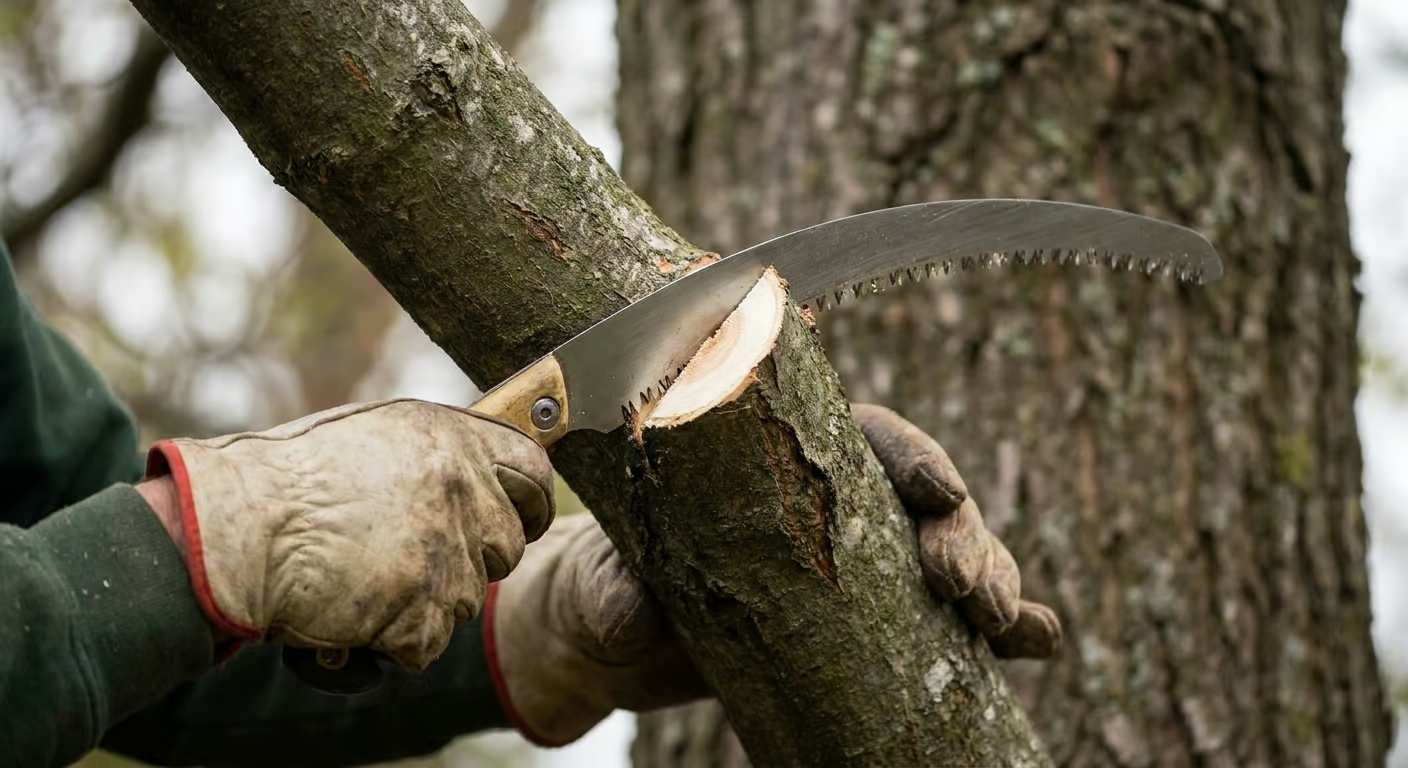
The best time for most structural pruning is late winter, before new growth begins. During dormancy, trees have stored energy reserves and no active foliage to support, so they can direct resources to compartmentalizing wounds. Cuts made in late winter close faster and with less risk of insect or disease entry.
For coastal evergreens, which keep their needles year-round, late winter is still ideal because sap flow is low and the tree is not pushing new growth. Deciduous trees are easier to prune when leafless, as the branch structure is fully visible.
Late Summer Pruning for Storm Preparedness
If the goal is specifically to prepare for high-wind season, late summer or early fall pruning has a distinct advantage. By this time, spring growth has hardened off, and the tree has completed its major growth flush. Removing hazardous branches now means they won’t be present when the first big storm arrives.
We often schedule wind-firming pruning in August or September, after the hottest weather but before the storm cycle begins. This timing allows us to inspect the entire tree, remove deadwood and weak branches, and thin the crown while the tree is still active enough to begin sealing the cuts.
Avoiding Pruning During Active Growth Periods
Pruning during the spring growth flush can be counterproductive for wind firmness. That is when trees are expending energy on new leaves and shoots, and large cuts may trigger excessive sprouting or weaken the tree. For species that bleed heavily, such as maples and birches, pruning in spring can also attract pests.
There are exceptions for emergency work, but for routine windthrow prevention we avoid the peak growth period. Late summer and late winter are the two windows that balance wound response, pest avoidance, and storm preparedness.
Windthrow-Prone Tree Species and Their Pruning Needs
Common Coastal Tree Species at Risk
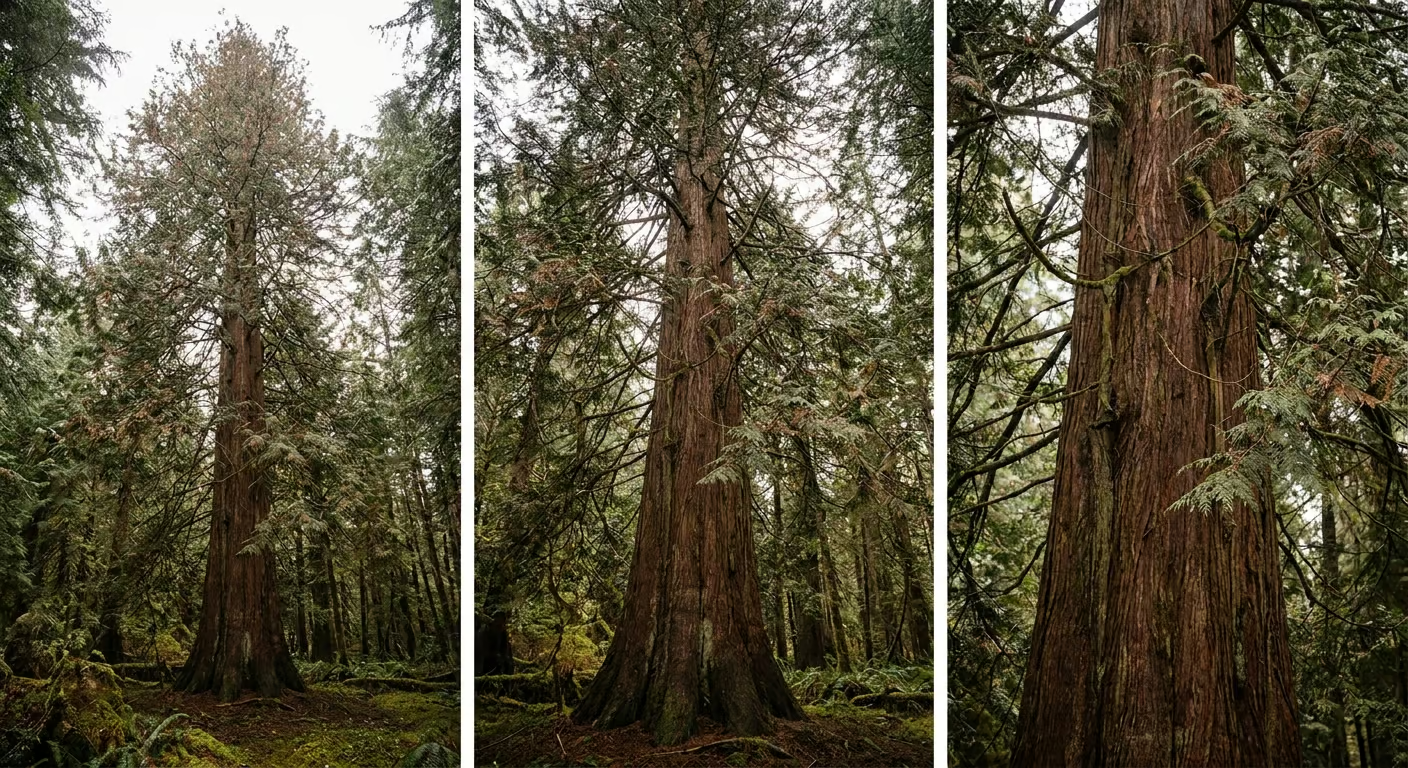
Some tree species are naturally more vulnerable to windthrow because of their root architecture, wood strength, or crown form. Shallow-rooted species such as western redcedar are prone to uprooting in saturated soils. Western hemlock has a dense crown and relatively weak wood, making it susceptible to stem breakage. Douglas-fir, while strong, can develop heavy tops that increase leverage.
Knowing which species are on a property helps us tailor a pruning plan. A tree that is otherwise healthy may still be at risk if its species is known to fail in high winds, and pruning can mitigate that inherent risk.
Species-Specific Pruning Approaches
Western redcedar benefits from light crown thinning to reduce sail area without stripping too much protective foliage. Western hemlock should have deadwood removed regularly and any dense interior growth opened up. Douglas-fir may need crown reduction if it has outgrown its site, and weak branch unions should be addressed early because of the species’ tendency to form multiple leaders.
For all species, the principle is the same: reduce wind load while preserving vitality. We never remove more than 25 percent of live foliage in a single pruning cycle, and we always leave enough interior branches to maintain the tree’s energy balance.
Monitoring High-Risk Trees
Regular inspection is as important as pruning itself. We look for changes in lean, soil cracking around the base, exposed roots, and mushrooms or conks on the trunk—all signs of declining stability. A tree that has been pruned for wind firmness should be reassessed every two to three years to ensure the crown density is still appropriate and no new defects have developed.
With over 6,000 trees serviced, we have seen how consistent monitoring and pruning keep even large, mature trees standing through severe coastal storms. That experience guides our recommendations for every property we visit.
Identifying and Removing Hazardous Branches Before Storm Season
Signs of Dead or Diseased Branches
Dead branches are obvious windthrow hazards because they have no flexibility and snap easily. Look for bark that is peeling, no live buds, or wood that is dry and gray. Diseased branches may show cankers, fungal growth, or discolored foliage. During a high-wind event, these branches are among the first to break, and they can cause significant damage when they fall.
Removing deadwood is one of the simplest and most effective wind-firming actions. It reduces the total weight of the crown and eliminates projectiles that might strike a roof, vehicle, or person.
Structural Defects That Increase Failure Risk
Beyond deadwood, certain structural defects predispose branches to fail in wind. Included bark, where two branches grow too tightly together, creates a weak attachment that can split. Cavities and decay at branch attachments reduce wood strength. Overextended branches that grow far beyond the main crown act as levers, concentrating stress at their base.
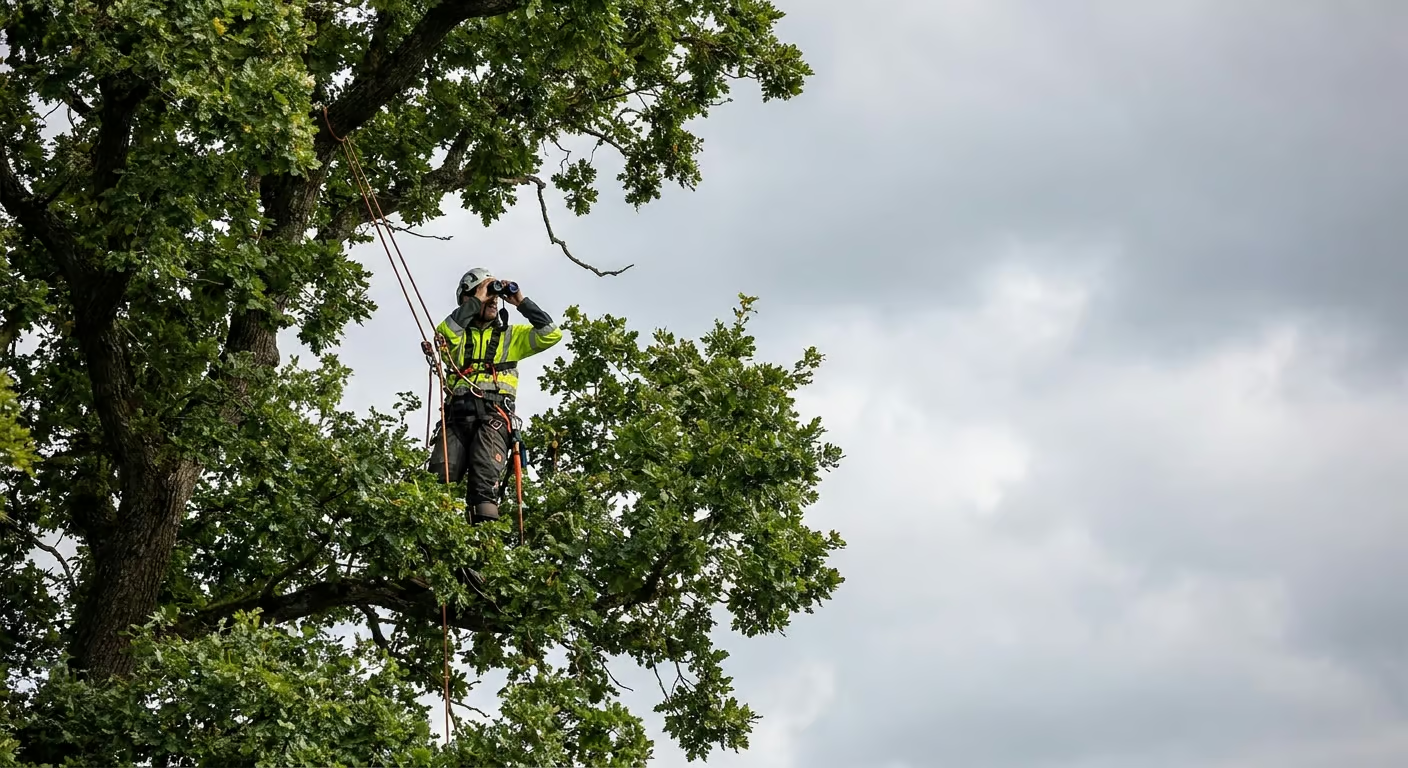
We inspect each branch union carefully, especially in the upper crown where wind loads are highest. Branches with visible cracks, multiple trunks, or a history of partial breakage are prioritized for removal or reduction.
Pre-Storm Inspection Checklist
Before storm season, we recommend walking the property with this checklist in mind:
- Dead or hanging branches anywhere in the tree
- Cracks or splits in the trunk or major limbs
- Leaning trees that have recently shifted
- Soil heaving or exposed roots on the windward side
- Overhanging branches near roofs, power lines, or driveways
- Dense, unthinned crowns that catch wind like a sail
Any item on this list warrants a closer look. Removing hazards before the storm is always safer and less expensive than dealing with the aftermath.
Structural Pruning for Young Trees to Build Wind Resistance
Training a Strong Central Leader
The architecture a tree develops in its first 15 years largely determines how it will handle wind later in life. For most species, a single dominant central leader is the strongest form. If two or more leaders compete, the union between them is almost always weaker than a single trunk. We train young trees by selecting the strongest, most vertical leader and pruning back the others to become lateral branches.
This early intervention prevents the co-dominant stems that cause so many storm failures in mature trees. It is far easier and less damaging to correct this when the tree is small than to try to fix a split trunk decades later.
Developing Well-Spaced Scaffold Branches
Scaffold branches are the permanent structural limbs that form the tree’s framework. They should be spaced vertically along the trunk, not clustered together. When branches originate too close together, they create weak attachments and compete for space. We prune young trees to encourage scaffold branches that are evenly distributed, both vertically and radially around the trunk.
Well-spaced scaffolds distribute wind loads more evenly. Instead of concentrating stress at one point on the trunk, the wind is shared across multiple strong attachment points, reducing the chance of branch or stem failure.
Early Correction of Poor Branch Angles
Branch angle is a critical factor in wind resistance. Branches with a wide angle of attachment—roughly 45 degrees or greater—form strong unions with dense wood. Branches with narrow angles, especially those growing nearly vertical, tend to have included bark and are prone to splitting. We correct poor angles early by removing or heading back narrow-angled branches and encouraging wider-angled laterals.
This type of structural pruning is most effective when the tree is young, but it can also be applied to mature trees with careful reduction cuts. The goal is to create a crown that flexes and moves with the wind rather than fighting it.
Pruning Near Power Lines and Structures for Safety
Maintaining Safe Clearance from Utilities
Wind can push branches far beyond their normal reach, so clearance around power lines must account for that movement. Utility vegetation management standards typically require a minimum of three metres of clearance from distribution lines, and more in high-wind areas. For service wires to a home, the clearance is often one metre. These are not arbitrary numbers; they are based on the distance a branch can sway in a strong gust.
We prune to maintain these clearances year-round, not just before storm season. Trees that have been regularly maintained near lines are far less likely to cause outages or fires when the wind picks up.
Preventing Property Damage from Falling Limbs
Overhanging branches are a common source of storm damage. When a large limb breaks, it can puncture a roof, crush a vehicle, or block a driveway. Pruning back branches that extend over structures reduces this risk significantly. We never remove more than necessary, but we ensure that no branch is within striking distance of a vulnerable target.
This is especially important for mature trees with heavy lateral branches. Even a healthy branch can fail if the wind catches it at the wrong angle, and the damage can be severe. Regular clearance pruning keeps property safe without harming the tree’s health.
Coordinating with Utility Companies
Pruning near energized power lines is not a job for anyone without specialized training and equipment. Utility companies employ certified arborists who work to strict safety standards. We coordinate with these programs when a tree on a customer’s property is close to the line, ensuring the work is done safely and legally.
For homeowners, the most important step is to know where the responsibility boundary lies. The line from the pole to the house is typically the homeowner’s responsibility. Keeping trees pruned away from that service wire is one of the most effective ways to prevent storm-related outages.
The Cumulative Benefits of Regular Maintenance Pruning
Long-Term Tree Health and Wind Firmness
Pruning is not a one-time fix; it is a long-term investment in a tree’s structural integrity. Trees that are pruned on a regular cycle—every two to five years depending on species and age—develop stronger branch unions, better weight distribution, and more open crowns. They are also healthier overall, because dead and diseased branches are removed before they can spread decay.
This consistent care builds wind firmness over time. A tree that has been properly maintained is far more likely to ride out a severe storm with nothing more than a few broken twigs.
Reducing Overall Windthrow Risk
Windthrow is rarely caused by a single factor. It is the result of wind load exceeding the tree’s anchoring and structural capacity. Regular pruning addresses the load side of that equation by reducing canopy density, removing weak attachments, and lowering the center of gravity. When combined with good soil drainage and root health, this can dramatically cut the chance of uprooting or breakage.
For properties with multiple mature trees, a scheduled pruning program is the most reliable way to reduce overall risk. It also makes the property safer and more resilient year after year.
A Sustainable Approach to Tree Care
Well-pruned trees live longer, require fewer emergency interventions, and provide more benefits—shade, habitat, and beauty—with less risk. By recycling green waste and avoiding unnecessary removals, we keep the tree canopy healthy while protecting the people and structures beneath it. Regular pruning is an act of stewardship that pays off in every season.
If you’re concerned about windthrow risk on your property, contact us for a professional assessment. We’ll evaluate your trees and recommend a pruning plan that fits their species, age, and site conditions.
For hemlock and cedar, species-specific pruning for wind and safety explains permit rules, typical defects, and how much thinning is appropriate.
Areas We Serve
To see how we apply those principles across the places we work, pick the area that matches where you live. Each hub brings together local notes, examples, and options.