A tree can look perfectly healthy from the outside while hiding a structural defect that could cause it to fail without warning. Green leaves and active growth do not mean the inside is sound. We regularly encounter trees whose canopies are full and lush, yet whose trunks are decayed to a dangerous degree or whose root systems have been quietly compromised. The first step to preventing property damage or injury is learning how to tell the difference between cosmetic health and structural integrity.
The key is to understand that trees compartmentalize damage. They can keep growing around decay, cracks, or weak branch unions for years, masking serious problems while appearing vigorous. In this guide, we explain the hidden structural defects found in otherwise healthy-looking trees, the visible clues that suggest trouble, and what a professional assessment actually involves. This is not about scaring you away from your trees—it is about giving you the knowledge to keep them safe.
Understanding Tree Structure and Hidden Risks
The Anatomy of a Tree: Key Structural Components
To recognize hidden defects, it helps to understand what a healthy tree looks like on the inside. A tree has three main structural zones: the root system, the trunk, and the branches. The roots anchor the tree and absorb water and nutrients; the trunk provides vertical support and carries those resources upward; and the branches spread to capture sunlight. Inside the trunk, the outermost living layer is the cambium, which produces new wood and bark. Just inside that is sapwood, which actively transports water. The central heartwood is dead but provides much of the tree’s compressive strength and stiffness. When heartwood decays, the tree loses significant structural support even though the sapwood and cambium may still be functioning perfectly well.
This is why a tree can be hollow or severely decayed and still leaf out every spring. The living, growing parts are doing their job, but the load-bearing core is gone. Over time, the tree becomes a standing cylinder with less and less wood to resist bending forces from wind and gravity.
Why Healthy Foliage Does Not Guarantee Structural Integrity
Healthy foliage tells you that the tree’s vascular system is moving water and nutrients. It does not tell you whether the trunk is sound, whether branch unions are strongly attached, or whether the root plate is stable. A tree with advanced heart rot can produce a complete canopy because the sapwood remains intact. Similarly, a tree with girdling roots may look normal above ground for years while its root system slowly strangles. Even a tree with a severe crack can stay green if the crack has not interrupted the flow of sap on that side.
We often see homeowners surprised when a beautiful, leafy tree fails during a storm. The truth is that the tree had likely been compromised for a long time. Its green appearance simply masked the structural weakness. That is why professional assessments look far beyond the leaves.
Common Structural Defects That Escape Notice
Internal Decay and Hollow Trunks
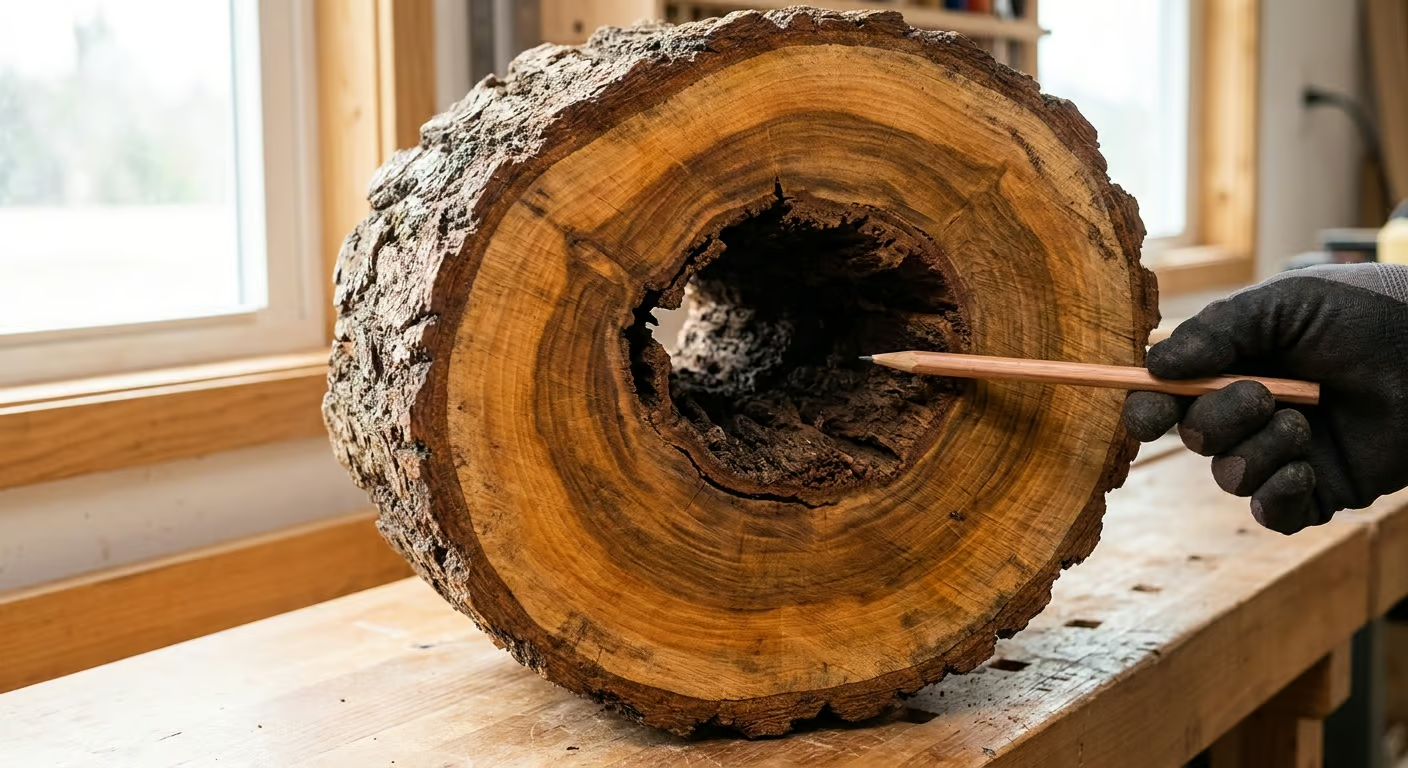
Internal decay is one of the most common and most serious hidden defects. Wood-decay fungi break down lignin and cellulose, the two main components of wood, reducing its strength. Trees respond by compartmentalizing the decay—sealing it off with chemical barriers—but that defense can be overcome. In many cases, decay begins at a wound, such as an old pruning cut, a storm-damaged branch stub, or a root injury. The fungus then spreads inward and upward through the heartwood, creating a hollow cavity, all while the outer shell of living wood remains intact.
A trunk can be more than half hollow and still stand for years. The danger increases as the ratio of sound wood to hollow space decreases. During high winds or ice storms, the remaining shell may not be able to withstand the forces. Small openings or holes in the trunk are often the only visible clue that a large internal cavity exists. We routinely find cavities many times larger than the hole that leads to them.
- Weak branch unions from co-dominant stems
- Included bark trapping moisture and debris
- Decay fungi entering through old wounds
- Root damage from construction or compaction
Included Bark and Weak Branch Unions
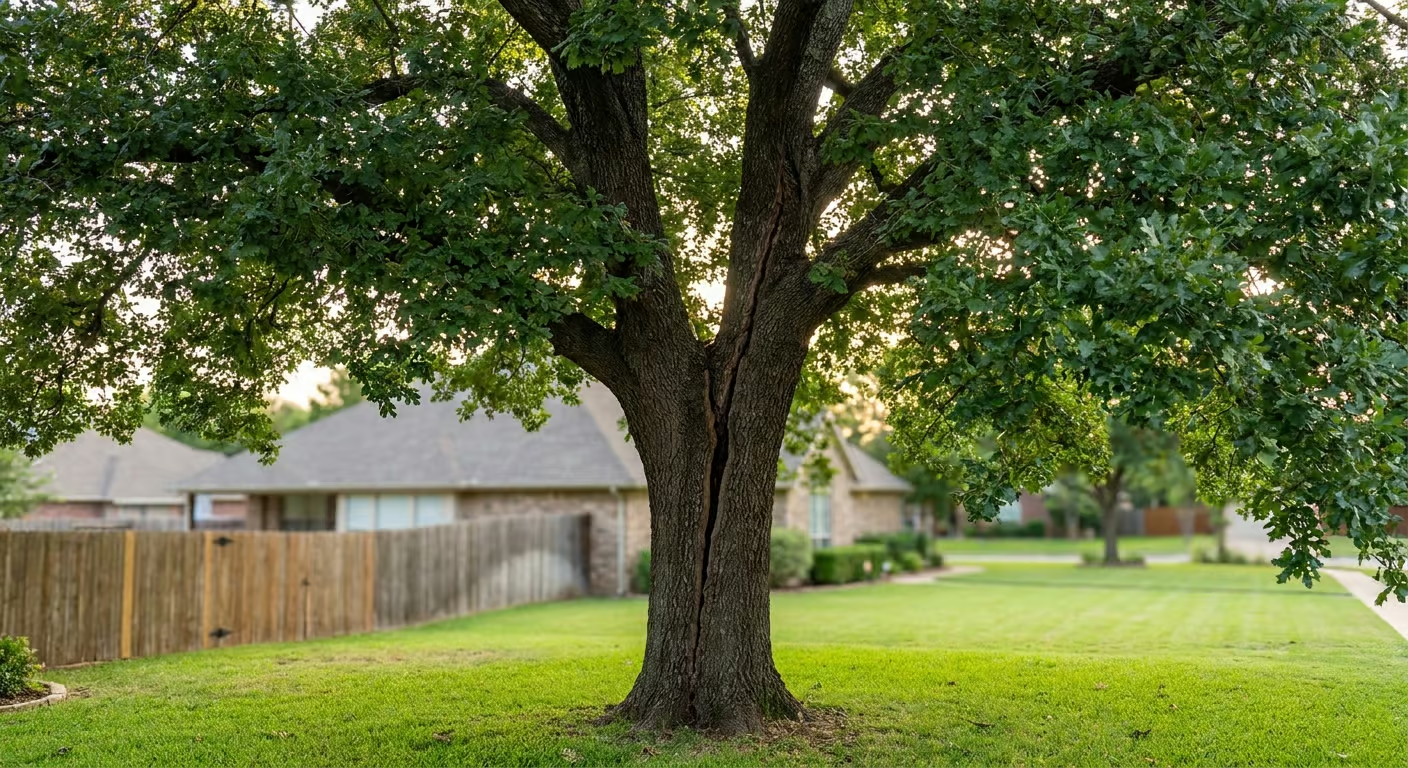
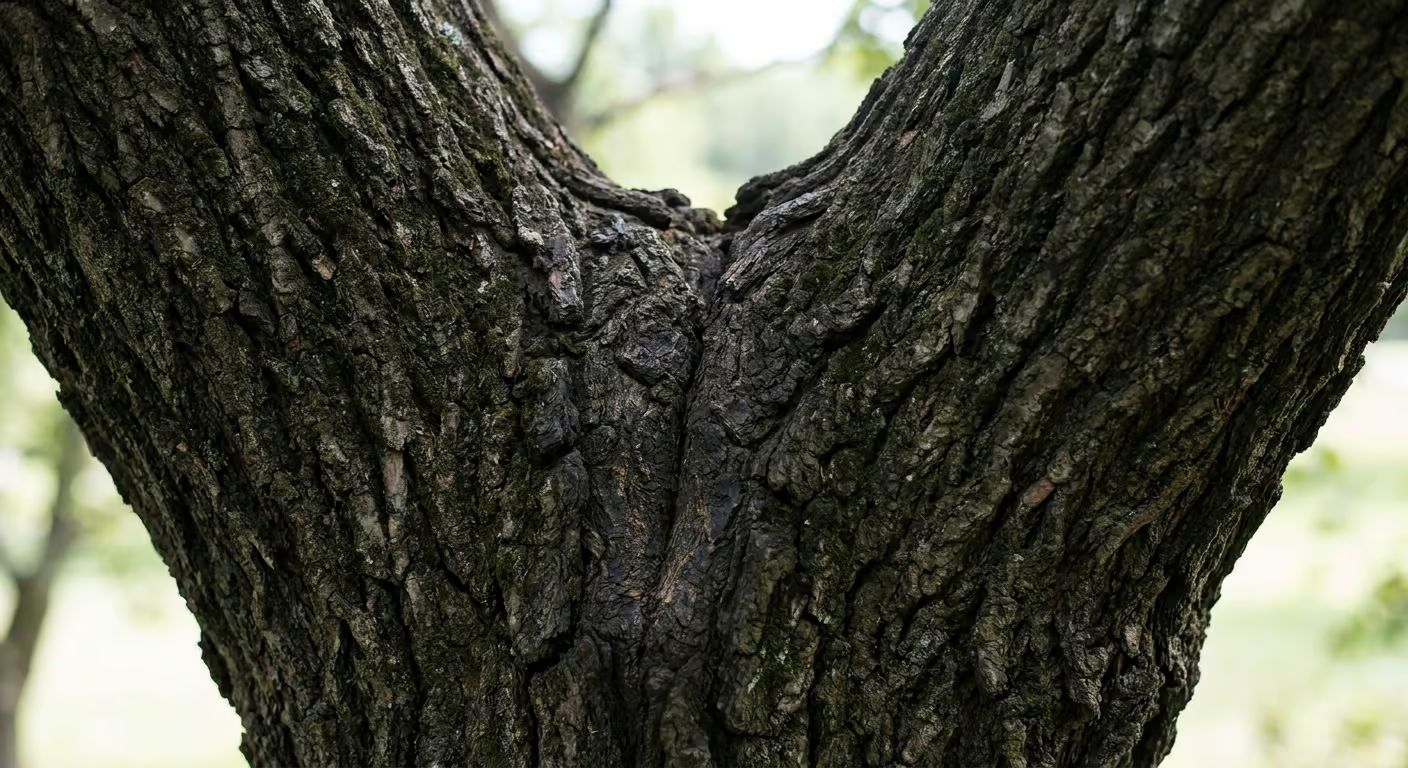
When two stems or branches of similar size grow close together at a narrow angle, they form a V-shaped crotch. As they expand, bark from each stem gets pressed between them, creating a seam of included bark. This bark does not form a strong wood-to-wood connection. Instead, the two stems are effectively glued together by a weak layer that can split under load. From the outside, the tree may look perfectly healthy, but that union is a point of serious weakness.
Included bark is especially common in fast-growing species and in trees that were not structurally pruned when young. The danger is highest when the union is near the base of the crown, where two large stems diverge. Under wind, ice, or heavy snow, that weak union can fail suddenly, tearing the tree apart. Look for a narrow V-shaped crotch, a dark seam running down from the union, and a swollen ridge at the base of the two stems—those are warning signs.
Root System Compromise and Girdling Roots
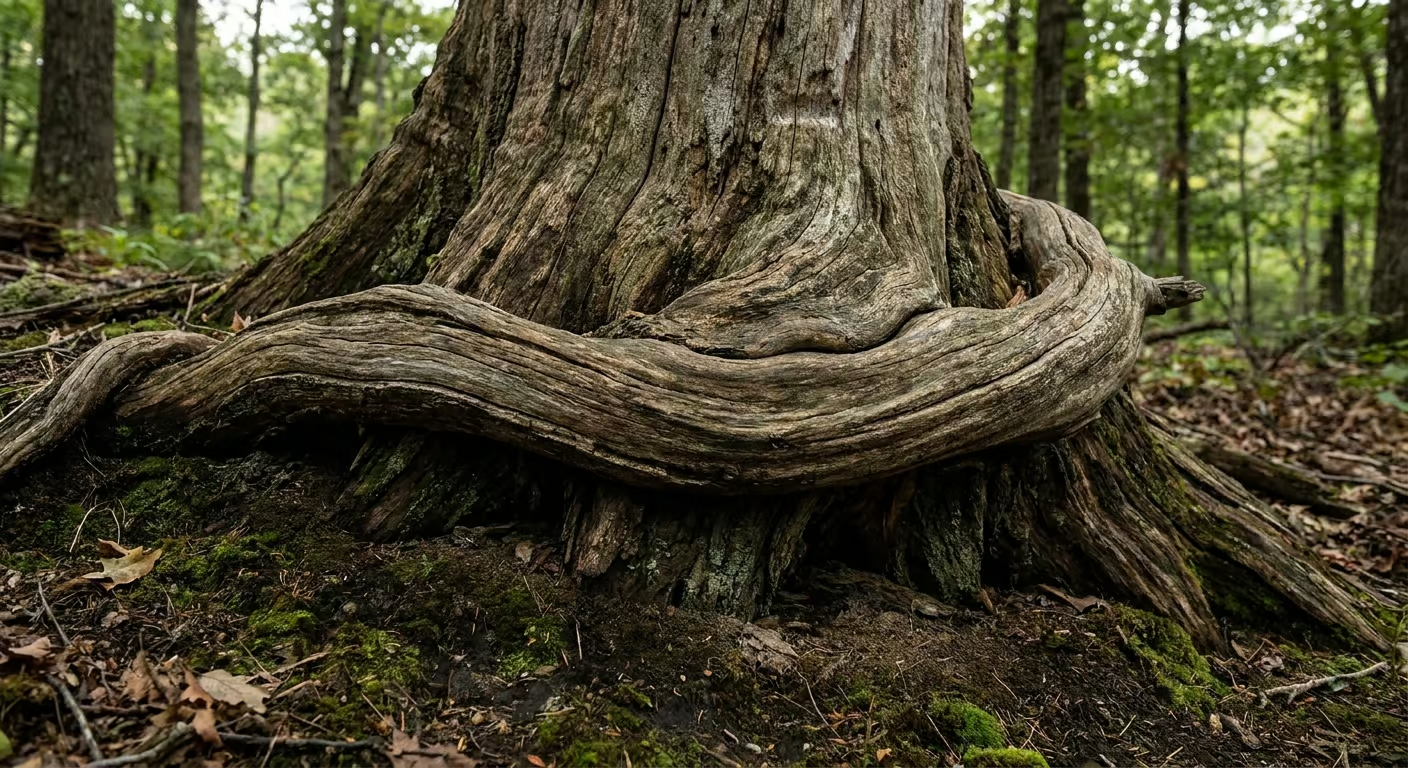
Root problems are often the hardest to spot because most of the root system is underground. Girdling roots are roots that grow around the trunk or other major roots, gradually compressing them and cutting off the flow of water and nutrients. This can weaken the tree’s stability and lead to decline or sudden failure. Girdling roots often develop when a tree is planted too deeply or when the root flare is buried by soil or mulch.
Soil compaction, trenching, and construction damage can also sever or crush roots, reducing the tree’s ability to anchor itself. A tree with compromised roots may show no above-ground symptoms for years. One visible clue is a trunk that goes straight into the ground like a telephone pole, with no visible root flare. Another is a tree that suddenly begins to lean, especially if the soil on the opposite side is cracked or lifted.
Visual Indicators of Underlying Problems
Cracks, Seams, and Bulges
Vertical cracks in the trunk are a clear sign of internal stress. They may be caused by frost, lightning, or the tree’s own weight as it struggles to hold together over a weak area. Horizontal cracks at branch unions or along the trunk can indicate that the wood is already splitting. Bulges or swollen areas, known as burls or reaction wood, can be a sign that the tree is compensating for decayed wood underneath. A trunk with a pronounced rib or seam running vertically may be hiding a shear plane—a line along which the trunk can split.
When you see a crack that was not there before, or one that is widening, that is a red flag. The bark may pull apart, exposing the wood beneath. Sometimes you can hear a hollow sound when tapping on a bulging area. These are exactly the signs a certified arborist looks for during a visual assessment.
Fungal Fruiting Bodies and Cankers
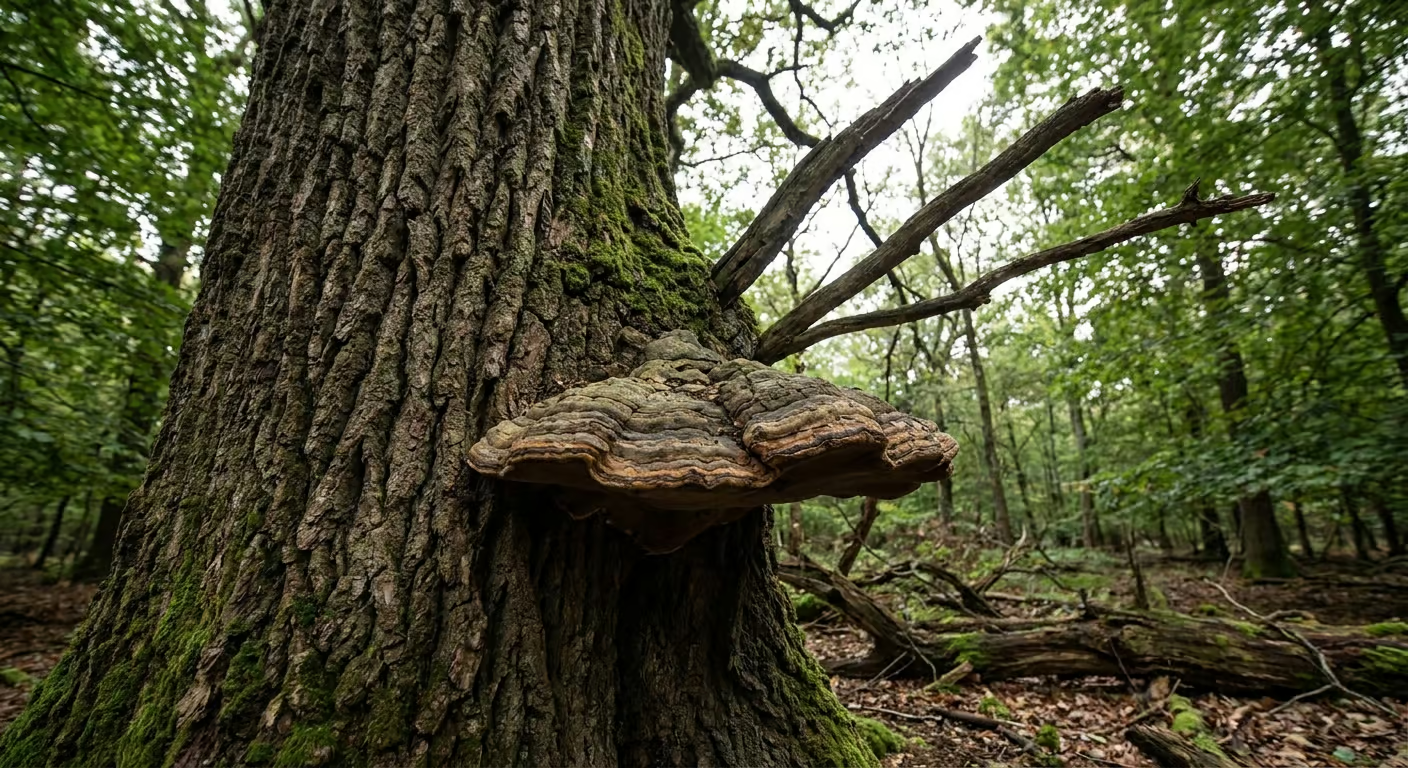
Mushrooms, conks, or shelf fungi growing on a trunk, root flare, or large branch are reliable indicators of internal decay. These fruiting bodies are the reproductive structures of wood-decay fungi. By the time they appear, the fungus has usually been active inside the wood for years. Common examples include bracket fungi on trunks and honey fungus clusters at the base. Not every fungal fruiting body means the tree is about to fail, but their presence demands a professional evaluation to determine the extent of decay.
Cankers are dead, sunken areas on the bark caused by fungal or bacterial diseases. They can disrupt the flow of water and nutrients and weaken the stem at that point. A canker that encircles a branch or trunk can girdle it, causing dieback above. If you see a canker with cracked or oozing bark, it should be checked.
Unusual Lean or Soil Heaving
A tree that has always had a slight lean is usually stable, because it grew that way and developed reaction wood to support itself. But a new lean, especially one that develops quickly, is a sign that the root plate may be failing. Look at the ground around the base. If you see soil cracking, lifting, or a gap between the soil and the trunk on the side opposite the lean, the roots are pulling out of the ground. This is an emergency: the tree could fall at any moment.
Soil heaving can also happen after heavy rain or wind, when the soil becomes saturated and loses its grip on the roots. In such cases, the tree may straighten back up when the wind dies down, but the root system has been irreversibly damaged. A professional should assess it immediately.
Professional Assessment: Beyond the Surface
Visual Tree Assessment (VTA) Protocol
Visual Tree Assessment is a systematic method for evaluating tree structure and identifying defects. It involves a thorough walk-around inspection, from the root collar to the tips of the branches, looking for signs of weakness. We examine the root flare for girdling roots or decay; scan the trunk for cracks, bulges, and cavities; assess branch unions for included bark; check the canopy for dead or hanging branches; and evaluate the tree’s lean and the condition of the surrounding soil. The assessment also considers the target—what the tree could hit if a part were to fail, such as a house, vehicle, or pedestrian area.
The goal of VTA is to identify defects that are likely to lead to failure and to determine whether the tree’s condition poses an unacceptable risk. It is not a guessing game. It is a structured process based on decades of research into how trees fail. A certified arborist documents the findings and uses that information to recommend pruning, support systems, monitoring, or, in some cases, removal.
Sonic Tomography and Resistograph Testing
When visual signs are ambiguous, we use diagnostic tools to see inside the tree without causing harm. Sonic tomography uses a series of sensors placed around the trunk to measure the speed of sound waves passing through the wood. Sound travels faster through solid wood and slower through decayed or hollow areas. The result is a color-coded map showing the internal condition of the trunk, including the location and extent of decay.
A resistograph is a precision drill that measures the resistance of the wood as a tiny needle penetrates the trunk. It produces a graph that shows changes in wood density, revealing hollow spots and areas of advanced decay. These tools give us objective data about how much sound wood remains, which helps determine whether a tree can be safely retained or needs to be removed.
The Importance of Certified Arborist Expertise
After more than a decade of evaluating trees in all conditions, we have learned that the most dangerous defects are rarely obvious from the ground. That is why every assessment we perform follows a step-by-step protocol and uses tools that let us see beyond the bark. Certified arborists are trained in tree biomechanics, species-specific failure patterns, and the interpretation of subtle signs. They combine that knowledge with field experience to avoid both unnecessary removals and missed hazards. An expert assessment is the only reliable way to know whether a green tree is actually safe.
Mitigating Risk: Proactive Tree Care
Structural Pruning and Cabling
Structural pruning is the best way to prevent many defects from developing in the first place. When done early in a tree’s life, it encourages a strong central leader and well-spaced branches with wide angles, reducing the likelihood of included bark and weak unions later. For mature trees, pruning can reduce end weight on heavy limbs, remove dead or cracked branches, and improve air flow through the crown. However, structural pruning on mature trees must be done carefully by a professional to avoid creating new wounds or imbalances.
For trees with existing weak branch unions or large heavy limbs, cabling and bracing can provide supplemental support. Steel cables are installed high in the crown to limit movement and share loads between stems. Braces can bolt a split crotch together. These systems do not cure decay or repair included bark, but they can significantly reduce the risk of failure and extend the safe life of a tree. A certified arborist should design and install any support system, and it must be inspected regularly.
Root Zone Management
Root health is structural health. The most important thing you can do for a tree’s long-term stability is to protect its root zone. Avoid driving heavy equipment over the root area, which compacts soil and crushes roots. Do not allow soil or mulch to be piled against the trunk; keep the root flare visible. If construction is planned near a tree, protect the root zone with fencing. For existing girdling roots, an arborist can sometimes prune them to relieve pressure, but this must be done carefully to avoid causing further damage.
Mulching the root zone with a 2- to 4-inch layer of organic mulch, kept away from the trunk, helps retain moisture and moderate soil temperature. However, piling mulch against the trunk (volcano mulching) creates a moist environment that promotes decay and root growth around the stem. Proper root zone care is a simple but powerful way to keep a tree structurally sound.
Monitoring and Regular Inspections
Trees are dynamic organisms. A defect that is minor today may become significant in a few years. Regular inspections by a qualified professional allow you to track changes over time and catch new problems before they become critical. The frequency of inspections depends on the tree’s age, species, location, and history, but large mature trees near structures or high-traffic areas should generally be checked every one to two years, and after major storms.
Documenting inspections with notes and photos creates a record that helps you and your arborist see trends. For example, a crack that has not widened in five years is less concerning than one that has doubled in six months. Monitoring is not a substitute for action when action is needed, but it is a core part of proactive tree care.
Conclusion: Prioritizing Tree Safety
A tree with a full green canopy can still be hiding a structural defect that threatens your property and your family. Internal decay, included bark, root compromise, and cracks do not always show up as dead branches or yellowing leaves. The only way to know if a tree is safe is to look for the subtle visual clues and, when necessary, have a professional assess the tree’s internal condition. Early detection through regular inspections can mean the difference between a tree that stands for decades and one that fails without warning.
If you have a tree that worries you, contact us to schedule an assessment. We will help you understand exactly what is happening beneath the bark and recommend the safest, most practical next step for your landscape.
After heavy rain, ground cracks, lifting, and leaning are red flags—learn the warning signs of soil failure and when to call before the tree lets go.
Areas We Serve
Because conditions differ from place to place, our area hubs bring the article’s advice into focus for your neighborhood—what we watch for, typical site constraints, and how projects are organized nearby. Use these pages to get a clear picture of local work.