
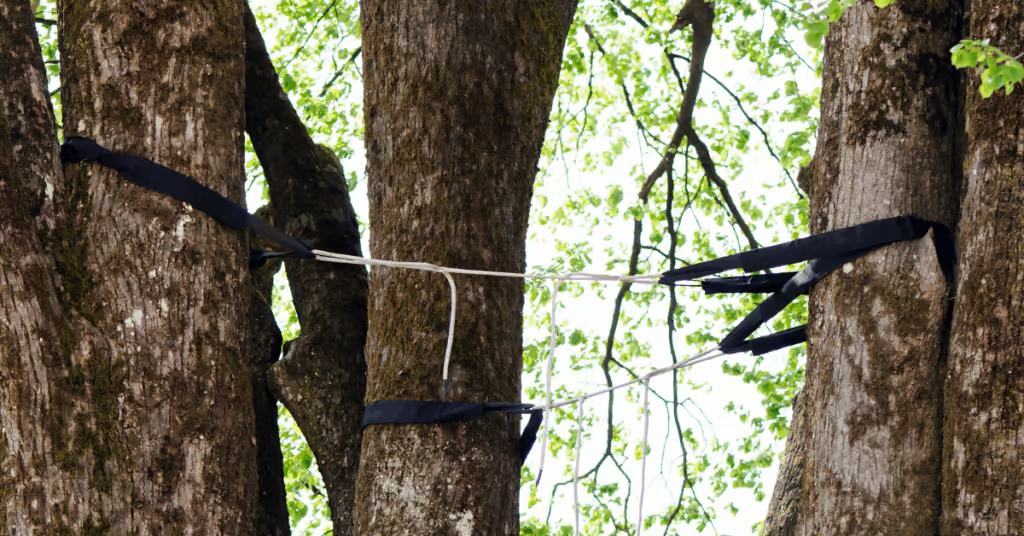
Trees are often the crown jewels of a landscape, providing shade, beauty, and ecological value. However, as living organisms, they are subject to structural weaknesses that can pose risks to your property and safety. This is where a cabling tree support system—and sometimes bracing—comes into play.
Tree cabling is a proactive support technique used to reinforce trees that have structural defects but are otherwise healthy tree. Install high-strength cables (steel or synthetic) between limbs using eye nuts, eye bolt and anchors. These cables act as a safety net, limiting the movement of branches during high winds and reducing the strain on weak unions. By redistributing the weight, cabling helps trees withstand severe weather events that might otherwise cause them to split or fail, reducing the risk of tree damage. For critical installations, an arborist may specify a high strength cable instead of lighter options.
While it sounds technical, the concept is simple: it’s like giving your tree a helping hand to hold itself together when nature gets rough. In many professional setups, cabling and bracing are considered together, because each method supports the tree in a different way.
When is Tree Cabling Necessary for Tree Care?
Not every tree requires supplemental support. A professional arborist typically recommends cabling when specific structural flaws are identified that could lead to failure, as part of a larger tree care plan. In some situations, cabling is paired with bracing to stabilize weak wood from both above (cables) and within the structure (rods). If you’re unsure what’s best for your yard, a qualified team that offers tree services can evaluate the risk and recommend the right approach.
Codominant Stems (V-Shaped Unions)
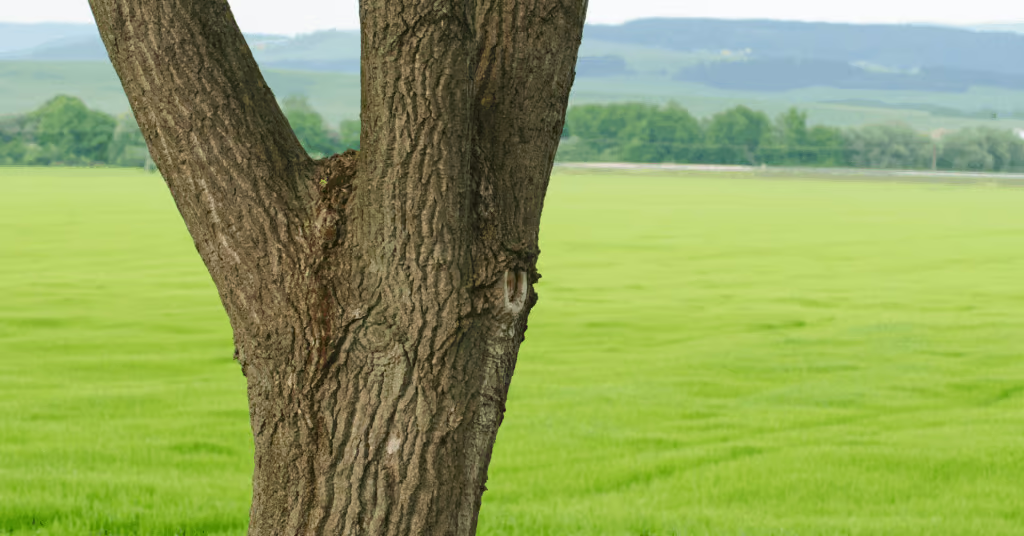
This is the most common reason for cabling. When a tree has two or more main trunks growing from the same point, they often form a tight “V” shape. As these stems grow thicker, they push against each other, creating a weak point that is highly susceptible to splitting. Tree bracing rods may be added with cabling to lower the risk of a weak union tearing apart.
Overextended Limbs
Some branches grow unusually long and heavy, extending horizontally far from the trunk. The sheer weight and leverage of these limbs make them prone to snapping under their own weight or during snow and ice accumulation. Based on risks like large branches overhanging a roof, combine pruning and bracing to limit sway and protect roof/driveway areas.
Split Crotches: When Cabling and Bracing Are Needed
If you notice a visible crack or split where a branch joins the trunk, immediate support is needed to prevent the limb from tearing away completely. An arborist may use rigguy wire systems and a rigguy wire stops to stabilize movement and keep supports in place.
Preservation of Historic Trees
Cabling helps protect large heritage trees so they can remain standing for future generations. This kind of work is closely tied to tree preservation, and it’s also common in city programs focused on urban forestry. If a tree is beyond recovery (like confirmed dead tree), supports aren’t advised since it will keep weakening. However, if a tree has significant root decay or instability at the base, cabling alone is not enough, and an inspection focused on rotting tree roots is essential before deciding whether the tree can be safely preserved.
Tree Cabling Benefits: Why These Services Matter
Investing in a cabling system offers more than just structural support; it provides peace of mind.
Enhanced Safety
The primary benefit is risk reduction. Stabilizing heavy tree limbs helps prevent falls onto your home, car, or loved ones—especially if limbs show cracks. If you notice a major limb or trunk visibly leaning toward your home, proactive support like cabling can reduce the risk of failure, while addressing a leaning tree may require additional steps such as targeted pruning or removal.
Extended Tree Lifespan
Structural defects don’t have to be a death sentence for a tree. Because cabling is intended for otherwise sound trees with structural issues, it is important to first rule out serious infections using tree disease identification so that diseased trees are treated—or removed—rather than simply reinforced. Cabling allows a tree to retain its canopy and continue growing for decades, avoiding the need for premature removal and supporting overall tree health.
Storm Damage Prevention
High winds and heavy snow are the enemies of weak branches. Cables restrict how far a branch can move, preventing it from swinging to the breaking point during storms. In higher-risk trees, proper bracing can add another layer of support when movement needs to be limited even further.
Cost-Effectiveness
Cabling often costs less than removing a mature tree, helping preserve property value and shade. In some situations, a structurally compromised tree may be safer to remove than to support, and learning when a tree removal permit is required in Oregon can help you make an informed decision before choosing between cabling and removal. Cheaper common grade cable may save now, but arborist-rated hardware is safer for long-term support.
How Long Does Tree Cabling Last?
Tree cabling is a long-term solution, but it is not permanent. The lifespan of the hardware depends on the type of materials used and the tree’s environment. Many installations also include posts or other anchor/attachment points as part of the overall layout, depending on site conditions and design.
Static Systems (Steel Cables)
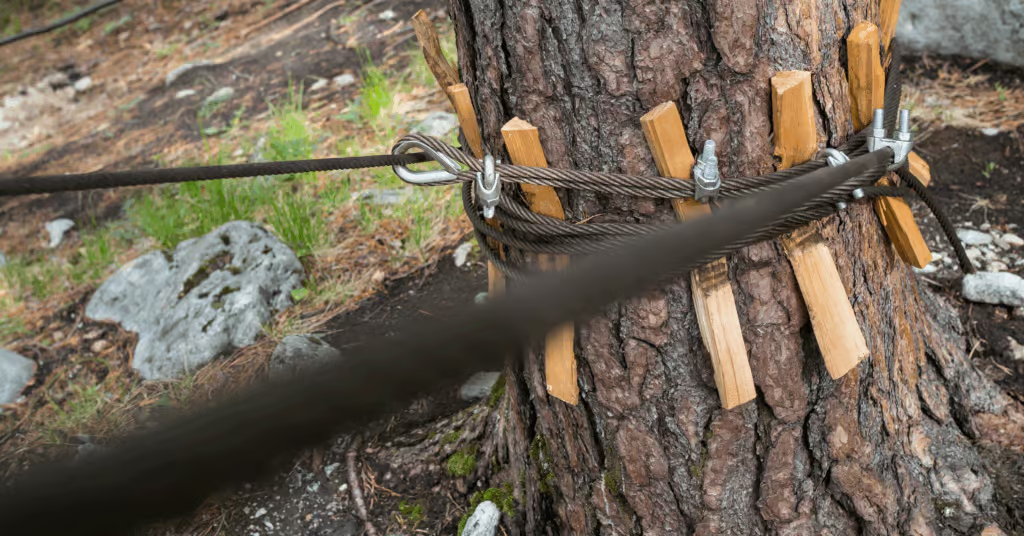
Traditionally made of galvanized steel, these systems are designed for rigidity and longevity. They typically last 20 to 40 years. However, because the tree continues to grow around the hardware, they require monitoring—especially when heavy duty components are used in high-load positions.
Dynamic Systems (Synthetic Rope)
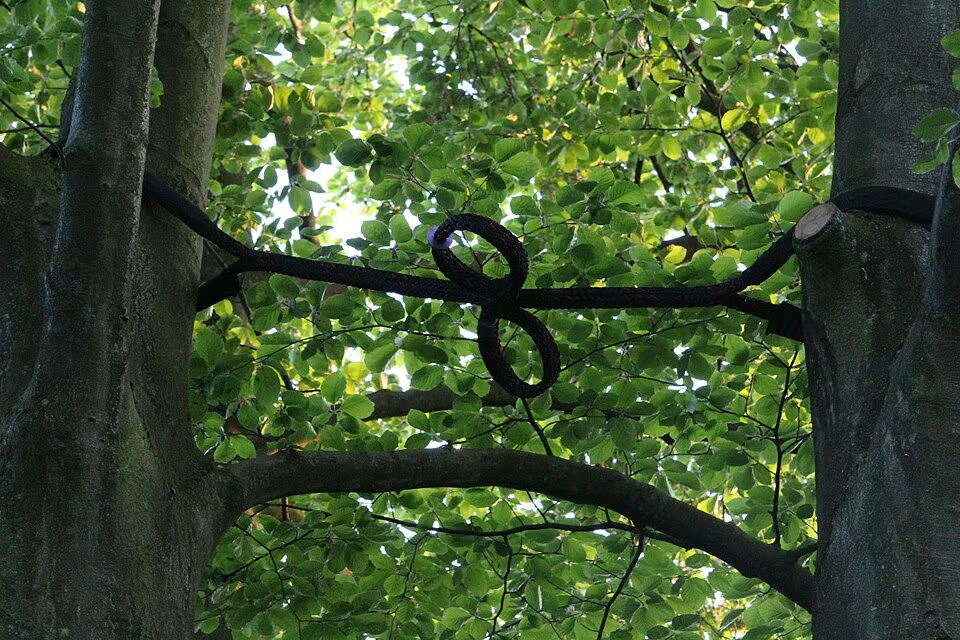
These modern systems allow for more natural tree movement, which helps the tree build its own supportive wood (reaction wood). This approach is often referred to as dynamic cabling. Because they are made of synthetic materials exposed to UV rays, they generally have a shorter lifespan of 5 to 10 years before needing replacement. Some installers also use systems designed to increase friction and stability at contact points, sometimes described as improved tree grip in the canopy.
Regardless of the system, maintenance is key. Have an arborist inspect cabling every 1–3 years for tension, hardware, and tree growth.
Cabling & Trimming Work Together
Cabling is rarely a standalone solution; it works best when paired with strategic pruning. Think of trimming as “weight reduction” and cabling as “structural support”. In certain tree risk cases, arborists may also consider bracing at the same time to strengthen a weak union internally. Because branches are bare and growth is slower, winter is often the ideal season to combine structural cabling with winter tree pruning, allowing arborists to see defects clearly and reduce limb weight more efficiently.
When an arborist installs a cable, they often perform reduction pruning on the ends of the heavy branches. This reduces the leverage arm and weight that the cable has to support, making the entire system more effective. Trimming also thins the canopy, allowing wind to pass through more easily (reducing “wind sail”), which further decreases the stress on weak unions. This combined approach is why many professionals plan cabling and bracing as part of one overall safety strategy.
Together, these two practices create a comprehensive defense system for your tree, addressing both the internal structure and the external forces acting upon it.
Final Thoughts: Professional Arborist Advice
Tree cabling is a specialized skill that blends engineering with biology. When done correctly, it can add decades to the life of your favorite trees and keep your property safe. However, because it involves working at heights, drilling into live wood, and calculating complex load limits, it is not a DIY project.
If you suspect your tree has a weak branch or a splitting trunk, consult a certified arborist. If an arborist determines that removal is the safest option for a hazardous tree, advanced tree notching techniques are used during felling, which is a very different process from the preservation-focused cabling and bracing described here. Assess if your tree needs cabling or bracing, and design custom supports to withstand the elements. For more practical tips and examples, you can also look for guidance from a trusted local tree blog.
Protect your trees and your property by having a certified arborist evaluate any weak branches, splits, or leaning trunks before they fail. For expert assessment, customized cabling and bracing plans, and ongoing maintenance you can rely on, schedule professional tree service in Hillsboro today.