
Storm-Proof Your Trees: A Guide to Pre-Season Preparation
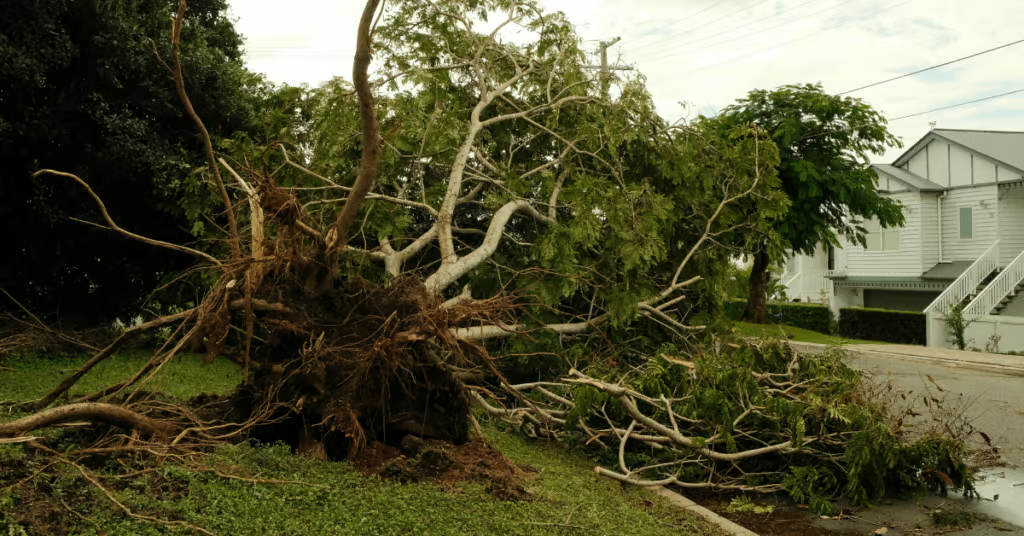
Preparing trees for storms isn’t only about protecting your property. It helps keep your trees healthy for the long term. It also reduces risk to your home, vehicles, and family. When severe weather hits Oregon, some trees withstand high winds. Others fail and cause major damage. In many cases, the difference comes down to the preventive care the tree received months earlier. That’s why preparing tree for storm should start well before the first big forecast.
Trees that haven’t been properly maintained become hazards during storms. Dead branches snap and fall, weak trunk unions split under pressure, and shallow root systems give way in saturated soil. The good news is that strategic preparation can greatly reduce storm-related risks. It can also help your trees come through severe weather stronger and healthier—especially during storm season.
Understanding Storm Season Risks
Recognize the Warning Signs of Tree Damage
Many tree problems aren’t immediately visible to untrained eyes. Even trees that appear healthy on the surface can harbor hidden weaknesses that make them vulnerable during storms. The Pacific Northwest’s climate is tough on trees. Wet winters, occasional ice storms, and strong winds can weaken them over time. This stress can lead to structural problems that get worse during severe weather—when wind and trees collide with force.
Watch for these critical warning signs:
Cracks in the trunk or major limbs often indicate structural weakness. These fissures may appear small but can rapidly widen under the stress of high winds or heavy snow loads. Dead or hanging branches are accidents waiting to happen. They often fail first during storms and can seriously damage anything beneath them.
Trees leaning more than usual suggest root problems or soil instability. A slight lean is natural for many trees, but a noticeable change in angle, especially after wet weather, signals potential failure. Soil heaving around the base indicates the root system is compromised and can no longer properly anchor the tree. If you notice a tree’s lean worsening after storms or see soil heaving around the base, it is important to review the risks, warning signs, and safe solutions for a tree leaning toward your house so you can act before failure occurs.
Exposed roots are vulnerable to damage and suggest the tree’s foundation is weakening. Fungal growth at the base of the trunk often indicates internal decay that’s invisible from above. Sparse leaves or areas of dieback are signs of tree stress. A stressed tree is less able to handle the force of storms, and these weak trees are often the first to fail.
Factors like drought, improper pruning, compacted soil, or previous storm damage create structural issues within trees. These problems accumulate over time, making trees increasingly susceptible to failure during the next weather event.
Check For Problems Before the Storm with an Arborist
The best time to prepare for storms is before they arrive. A professional tree risk assessment can reveal problems you may not notice. It also provides a clear plan to help protect your property. Certified arborists use systematic inspection methods to evaluate every aspect of tree health and stability.
During a comprehensive tree inspection, arborists examine the entire tree from multiple angles. They look at branch structure, checking for weak unions where branches meet the trunk. They assess the canopy density and balance, noting whether the tree’s center of gravity could make it prone to toppling. They inspect the trunk for wounds, cracks, or signs of decay.
Root health receives particular attention. Arborists check for circling roots that don’t grow outward into the landscape. They also look for girdling roots that can choke the trunk. In addition, they watch for signs of root rot or fungal infection. They evaluate soil conditions, checking for compaction that restricts root growth and proper drainage that prevents waterlogging during heavy rains.
Professional inspections also consider the tree’s surroundings. How close is it to your home, power lines, or high-traffic areas? What direction do prevailing winds come from? Are there other trees nearby that could fall onto this one? These contextual factors help arborists prioritize which trees need immediate attention.
For Portland-area properties, late summer through early fall is the ideal time for storm-preparation inspections. This schedule allows the work to be finished well before winter weather arrives. It also gives trees time to seal off pruning wounds before they enter dormancy.
Strategic Pruning & Care for Tree Health
Prune Trees Strategically Each Season
Preventative pruning stands as your primary defense against storm damage. A professionally pruned tree is much more likely to hold up in high winds and heavy rain. That can help you avoid expensive emergency removals and property repairs. Strategic pruning focuses on creating strong structure while maintaining the tree’s natural form and health—this is a core part of tree care. Understanding the difference between tree trimming and tree pruning also helps you choose the right type of service, whether you are shaping for appearance or improving structure for better storm performance.
The goal isn’t to remove as much as possible—over-pruning actually weakens trees. Instead, professional arborists target specific problem areas. They remove dead, diseased, and dying branches that offer no structural benefit and are most likely to fail during storms. They eliminate crossing or rubbing branches that create wounds and weak points. They address co-dominant stems where two equally-sized leaders compete, creating a weak union prone to splitting.
Thinning dense canopies reduces wind resistance without compromising the tree’s health. Think of it like opening windows during a windstorm—air can flow through rather than pushing against a solid wall. Removing some interior branches helps wind move through the canopy more easily. This reduces the force placed on the trunk and root system and lowers the risk of wind damage.
Elevating low-hanging branches over walkways, driveways, and roofs serves dual purposes. It prevents damage to structures during storms while improving clearance for vehicles and pedestrians. Most important, it removes branches that could break under heavy snow or ice. This helps prevent damage to cars and keeps driveways and access routes clear during emergencies.
Proper pruning technique matters enormously. Make cuts just outside the branch collar. The branch collar is the slightly swollen area where the branch meets the trunk or parent branch. This location allows the tree to properly seal the wound and compartmentalize decay. Flush cuts that remove the branch collar damage the tree’s natural defenses. Stub cuts that leave protruding wood create entry points for disease and pests.
Timing your pruning work makes a significant difference. For most tree species, late winter during dormancy is ideal. During this period, trees are less likely to develop disease. For many species, late fall and winter offer the ideal window for making structural cuts, and our guide on why winter is the best time to prune trees explains how proper timing reduces disease risk and supports storm resilience. Any pruning wounds stay exposed for a shorter time before spring growth starts to heal them. With fewer or no leaves, it’s also much easier to see the branch structure clearly. However, oak trees should only be pruned between November and March to avoid oak wilt disease, which spreads during warmer months.
Encourage Good Branch Angles
For most deciduous trees, narrow angles between branches and the trunk signal future weakness. Branches that grow at sharp, narrow angles can trap bark between the branch and the trunk. This is called bark inclusion. This prevents proper wood formation and creates a structural fault line that’s likely to fail under stress.
Strong branch angles are usually about 30 to 45 degrees from vertical. On a clock face, that’s roughly the 10 o’clock or 2 o’clock position. These angles allow proper wood formation at the attachment point and distribute weight more effectively. When pruning young trees, keep branches with strong, well-spaced angles. Remove narrow or upright branches early, before they become major structural parts of the tree.
Encourage Strong Branch/Trunk Size Relationship
Ideally, lateral branches should be no more than half to three-quarters the diameter of the trunk they’re attached to. Branches approaching or exceeding trunk diameter create imbalanced weight distribution and stress points. The trunk may not be able to support such large branches during storms, especially when loaded with ice or snow.
When evaluating trees, look at where major branches connect to the trunk. If a branch is almost as thick as the trunk, it may need attention. Depending on the tree’s health and overall structure, it may be a good candidate for reduction pruning or removal. This principle matters most for young trees. Early corrective pruning prevents issues that can become difficult—or impossible—to fix as the tree matures.
Don’t Cut Branches Back to Stubs
Stub cutting is one of the most damaging pruning mistakes homeowners and non-professional tree services make. When a branch needs to be removed, cut it back to the main trunk. You can also cut it back to a strong lateral branch that can take over as the lead. That lateral branch should usually be at least one-third the diameter of the branch being removed.
Leaving stubs prevents proper wound closure. The tree cannot seal over the exposed wood, leaving an entry point for decay fungi and insects. Stubs also produce weak, poorly attached sprouts that become future hazards. Long, natural limbs on trees are strong and evolved to handle storm conditions. Properly executed cuts respect the tree’s natural architecture and defensive capabilities.
Remove Temporary Branches
Certain growth patterns signal structural problems or wasted energy. Rubbing branches wear away bark where they contact each other, creating wounds that invite disease. These should be removed, keeping the better-positioned of the two branches.
Suckers are fast-growing, vertical shoots that sprout from the base of the trunk or the roots. They pull energy away from the main tree and rarely develop strong structure. Water sprouts growing straight up from horizontal branches display similar poor attachment and should be removed. These temporary growths crowd the canopy without contributing to the tree’s structural integrity. If you’re unsure what to cut, follow basic tree care tips from a certified arborist.
Build Tree Resilience to Protect your Property
Maintain a Stable Center of Gravity
A tree’s center of gravity should be positioned over its trunk for maximum stability. Trees naturally develop somewhat asymmetric crowns in response to available light, neighboring trees, and prevailing winds. However, severe imbalance creates tipping forces that strain the root system and can lead to failure during storms.
If a tree is leaning, strategic pruning can help rebalance it. Remove branches on the leaning side to reduce weight pulling in that direction. Encourage branch growth on the opposite side through selective thinning that opens up that area to more sunlight. For young or recently leaning trees, this approach can significantly improve stability over time.
Mature trees with pronounced leans require professional assessment. The lean may be stable and long-established, or it may indicate active root failure. An arborist can determine whether the tree poses unacceptable risk or can be managed safely.
Reinforce Mature Trees Before the Next Storm
Mature trees provide invaluable benefits—cooling shade, property value increases, wildlife habitat, and aesthetic beauty. But when storm winds howl, these gentle giants can become potential hazards if structural weaknesses exist. Fortunately, supplemental support systems can extend the life and safety of valuable trees.
Cabling and bracing act as support systems for trees with weak structural points. Steel cables installed high in the canopy between branches or co-dominant stems limit movement and reduce stress during high winds. Cables aren’t meant to stop all movement. Trees need some flex to build strong wood. Instead, cables limit excessive bending that could lead to failure.
Brace rods are threaded steel bolts installed through weak branch unions. They’re often used on trunks with multiple leaders or on branches that are starting to split. These rods physically hold sections together, preventing cracks from widening. Combined with cables, bracing systems work with the tree’s natural movement while providing critical reinforcement at vulnerable points.
Professional installation is essential. Cables need to be installed at the right height, usually in the upper two-thirds of the crown. They also must be set at the proper angles so they can redistribute loads effectively. Hardware must be properly sized and installed to avoid damaging the tree while providing adequate support. Over time, trees grow around properly installed systems, incorporating them into their structure.
Species with open canopies or multiple trunks benefit most from cabling and bracing. In the Pacific Northwest, this includes many native species like bigleaf maple, Oregon ash, and certain oak varieties. Trees that made it through a storm with only minor damage are often good candidates for added support. This extra support can help prevent a full failure during the next storm.
Get Healthy Soil & Strong Roots
Just as buildings need solid foundations, trees need healthy soil to stand strong during storms. Many people don’t realize that trees often fail because their roots cannot hold on, not because their trunks break. Root anchorage depends entirely on soil conditions—and it’s one of the biggest care tips for long-term stability.
Soil compaction is the most common factor leading to tree decline and storm vulnerability. Compacted soil reduces large pore spaces, which decreases oxygen levels and impairs drainage. As a result, rooting depth becomes restricted. Tree roots cannot penetrate compacted soil—it’s as useless as no soil at all. Stressed trees with shallow root systems topple far more easily than those with deep, spreading root networks.
Every place where humans and machines exist, soil compaction will be present. Construction activity, vehicle traffic, even repeated foot traffic compacts soil and damages root systems. Around urban and suburban trees, compaction is nearly universal and represents one of the greatest threats to tree stability.
Improving soil conditions around existing trees:
Avoid heavy traffic or parking vehicles near tree bases. The critical root zone extends well beyond the trunk you can see. It usually reaches out to the dripline, which is the area beneath the outer edge of the canopy. Weight from vehicles or equipment crushes soil pores and damages roots directly.
Apply a layer of organic mulch around trees, extending out to the dripline when possible. Mulch provides multiple benefits: it helps prevent soil compaction from heavy rain. It also retains moisture during dry periods and reduces extreme soil temperature changes. As it slowly breaks down, it adds nutrients to the soil. Use wood chips, shredded bark, or similar organic materials in a layer two to four inches deep.
Critical mulching technique: never pile mulch against the trunk. This creates excessive moisture against the bark and can lead to rot, pest problems, and disease. Leave a small gap of one to two inches between mulch and trunk. The profile should look like a donut, not a volcano.
Ensure proper drainage around trees. Standing water indicates poor drainage that can lead to root suffocation and rot. In naturally wet areas, choose tree species adapted to those conditions. For trees in low spots, improving grade or installing drainage may be necessary to maintain root health. If you suspect saturated soil or standing water is damaging your trees, learning more about rotting tree roots, their warning signs, treatment, and prevention can help you address hidden decay before a storm exposes the problem.
Aerate compacted soil carefully. For established trees, mechanical aeration can help if done outside the critical root zone. Radial trenching involves digging narrow trenches that extend outward from the trunk like spokes on a wheel. Filling those trenches with compost can improve soil conditions while avoiding damage to major roots. However, these techniques require professional expertise to avoid causing more harm than good.
For new plantings, prepare soil properly from the start. Dig planting holes wide rather than deep—two to three times the width of the root ball but no deeper. This encourages lateral root spread. Avoid planting too deep, which is one of the most common and damaging installation errors. The root flare—where the trunk widens at the base—should be visible at or slightly above ground level.
Timeline & Implementation
When to Prepare Your Yard
Storm preparation follows an annual cycle, with different tasks appropriate at different times. Understanding the timing helps you care for your trees when they can respond best. This is especially important if you’re choosing trees for storm season. It also matters when you’re maintaining older trees.
Late summer to early fall is the ideal time for comprehensive tree risk assessments. Schedule professional inspections during this period so any necessary work can be completed before storms arrive. Arborists can assess a tree’s health while the leaves are still on the tree. This makes it easier to judge vitality and spot signs of disease or pests.
Late fall marks the optimal window for major pruning work on most tree species. As trees enter dormancy, pruning creates less stress. Trees are less susceptible to disease during this period, and insects are largely inactive. Fresh wounds will be exposed for minimal time before spring growth begins the healing process. Complete pruning well before winter storms hit—late October through early December for the Portland area. This is also a smart time to address overgrown branches before they become dangerous.
Early winter is the time to apply fresh mulch if needed and complete any cabling or bracing installations. Once deciduous trees have dropped their leaves, arborists can see branch structure clearly and position support systems most effectively. Mulch applied in early winter provides root protection throughout the cold months.
Winter through early spring represents the storm season when your preparation pays dividends. Monitor trees during and after major weather events. Note any changes—new leans, broken branches, or root exposure. Document damage for insurance purposes if necessary and schedule follow-up assessments after severe storms. If a major storm does bring a tree down, our guide on who is responsible for removing a fallen tree explains how liability is usually handled between neighbors, utilities, and property owners.
Spring is the time for post-winter inspection and minor corrective work. Check trees for any damage that occurred during winter. Remove broken branches. Assess whether winter storms revealed new weaknesses that need attention. This is also a great time to plant new trees. It gives them a full growing season to establish roots before their first winter.
Summer requires monitoring for pest and disease problems, which are most active during warm weather. Maintain adequate water during dry periods—drought-stressed trees are more vulnerable to storm damage. Avoid pruning oak trees during summer months to prevent oak wilt disease.
In the Pacific Northwest, atmospheric rivers and winter storms create the biggest risk for trees and property. The most important preparation window is late August through November. This allows all assessment, pruning, and reinforcement work to be completed well before winter weather patterns establish themselves. Pacific Northwest ice storms, while less frequent than windstorms, can be particularly devastating. The combination of freezing rain and wind creates massive weight loading on branches and pulls down even healthy trees. Preparation is especially critical for properties in foothill areas where ice is more common.
The best storm preparation happens years in advance through consistent maintenance. Annual inspections catch problems while they’re small and correctable. Regular pruning maintains good structure throughout a tree’s life. Proper watering during dry periods strengthens root systems. Mulching and soil management create conditions for robust root development. These practices compound over time, creating trees that are fundamentally more resilient to whatever weather comes their way.
Don’t wait until storm warnings are issued to begin preparation. By that point, it’s too late for most protective measures. Pruning during or immediately before storms can actually increase damage risk by creating fresh wounds and removing branches that provide counterbalance. During and after major storms, emergency tree services can get overwhelmed. That can make it hard—or even impossible—to get help when you need it most. In regions where hurricanes are a concern, this planning becomes even more important.
Think of storm preparation as insurance—you invest beforehand so you’re protected when disaster strikes. Preventive pruning and routine maintenance cost far less than emergency tree removal and property damage repairs. They also reduce the chance of injuries caused by falling trees or branches. More important, proper preparation preserves your trees, maintaining the long-term benefits they provide to your property and community. If you’re building a checklist, add a second reminder for preparing tree for storm so nothing gets skipped.
Professional arborists possess the training, tools, and experience to strengthen trees and protect property before severe weather strikes. When removal is the safest option, professionals rely on controlled tree notching techniques to guide the tree’s fall and protect nearby structures during storm‑related work. Certified arborists follow industry-standard best practices for assessment, pruning techniques, and support system installation. They understand tree biology and how trees respond to different interventions. They carry appropriate insurance to protect you if accidents occur during tree work.
Your trees are valuable assets that increase property value, reduce energy costs, improve air quality, and enhance quality of life. They deserve professional care from qualified experts who will protect both the trees and your property. By taking action now, before storms arrive, you help your trees stay strong and safe in any weather. You also help them keep providing shade, beauty, and other benefits for decades to come—and that’s the real value of smart tree care tips.
When the forecast calls for high winds and heavy rain, you don’t have to wait and hope your trees make it through unscathed. Thoughtful, proactive care now can prevent expensive damage and keep your landscape safer year‑round. If you’re ready to have a certified team inspect, prune, or reinforce your trees before the next storm hits, schedule professional tree service in Hillsboro so your property is protected and your trees stay strong in any weather.